
5 Salary Negotiation Email Templates Backed by Research
5 Salary Negotiation Email Templates Backed by Research

The best salary negotiation email is short, opens with genuine thanks, and states a specific counter number backed by one clear reason. Skip asking if the offer is “negotiable”; treat it as an opening bid and respond with your own. Close by asking for a written revision or a quick call, and let the templates below do the heavy lifting.
TL;DR:
- Countering a salary offer with a specific figure is more effective when supported by market data or a competing offer, not personal needs or vague requests.
- Asking for additional benefits like equity, PTO, or early performance reviews can often be negotiated even when base salary is fixed.
- Keep negotiation emails short, polite, and focused on one or two priorities, with a clear ask and a concise reason backed by research or a solid market benchmark.
- Avoid asking permission, apologizing excessively, or combining multiple asks in one message, as these weaken your bargaining position.
- Using a career report or pay calculator provides credible, role-specific numbers that strengthen your counteroffer and improve your chances of success.
Table of Contents
- Salary Negotiation Email Templates You Can Copy Today
- How Do You Know Which Template to Use?
- Getting the Mechanics Right: Subject, Tone, and Timing
- What Makes Your Number Believable
- Mistakes That Quietly Kill Your Leverage
- The Fastest Version: Copy, Customize, Send
- Turning ResumeMatch’s Reports Into Real Negotiating Ammunition
- Why a Well-Timed Email Beats an Awkward Phone Call
- Where ResumeMatch Fits Into Your Negotiation Prep
- Sources
- FAQ
Salary Negotiation Email Templates You Can Copy Today
The right words depend on your leverage, but the structure barely changes: gratitude, ask, reason, next step. Below are five scenarios you’ll actually run into after an offer lands.

1. Countering a base-salary offer
Subject line: “Excited About the Offer, One Quick Question” or “Following Up on [Job Title] Offer”
Hi [Hiring Manager Name], thank you again for the offer for [Job Title]. I’m excited about the role and the team. Based on my [X years] of experience in [skill/area] and current market rates for similar positions, I was hoping we could discuss a base salary closer to [$X]. Would you be open to a revised offer, or a quick call this week to talk it through?
2. Asking for a signing bonus when base pay is capped
If HR tells you the band is locked, pivot: “I understand the base is fixed at [$X]. Given [relocation costs / a competing offer / the gap between this and my target], would a signing bonus of [$X] be possible to help bridge that difference?”
3. Leveraging a competing offer
Mention it without oversharing: “I want to be transparent. I’ve received another offer at [$X], and I’d genuinely prefer to join your team. Is there flexibility to bring your offer to [$Y]?” You don’t need to name the other company.
4. Requesting more time
“This is a big decision and I want to give it the attention it deserves. Would it be possible to have until [specific date] to respond?” Always name a date. Open-ended requests read as stalling.
5. Negotiating total compensation when base is fixed
Ask about equity vesting, an accelerated performance review (say, at 90 days instead of 12 months), extra PTO, or a remote-work stipend. When salary is genuinely fixed, these levers often move faster than base pay does.
How Do You Know Which Template to Use?
Before you write anything, figure out where your leverage actually sits. Not every offer deserves the same script.
Run through this checklist first:
- Do you have a competing offer in hand, or just a strong sense of your market value?
- Does your skill set solve a problem this employer is struggling to fill?
- Has the recruiter hinted at flexibility (“let me see what I can do”)?
- Is the role urgent to fill, or is this a slow-moving hire with backup candidates?
From there, set two numbers privately: your target (what you’d be thrilled to get) and your walk-away minimum (the number below which you’d decline). Decide which matters more to you: base salary, a bonus, or benefits like PTO and remote flexibility. That decision shapes which template you send first.
Pro Tip: Pull your benchmark from at least two sources before you name a figure. One general market source and one role-specific source (like a posted pay range or a competing offer) makes your number sound researched, not guessed.
Getting the Mechanics Right: Subject, Tone, and Timing
A negotiation email lives or dies on its first ten seconds. Get the mechanics wrong and even a fair ask gets ignored.
Subject lines that work without sounding pushy:
- “Re: [Job Title] Offer, Quick Question”
- “Thank You, Plus One Ask”
- “Following Up Before I Confirm”
Structure every email the same way: open with thanks, state your ask, back it with one brief reason, close with a specific next step. Keep it under 150 words. Recruiters and hiring managers read these on their phones between meetings; a wall of text gets skimmed, not answered.
Address the person who made the offer, usually the recruiter or HR contact, and CC the hiring manager only if they’ve been part of the direct conversation. If you’re facing an “exploding offer” (a deadline of 24 or 48 hours), it’s fair to reply immediately and ask for a short, specific extension rather than accepting under pressure or letting the deadline lapse.
What Makes Your Number Believable

The single biggest research finding in salary negotiation is deceptively simple: ask. Roughly 85% of candidates who counter an offer make some progress, whether that’s a higher base, a bonus, or better terms elsewhere in the package. The failure mode isn’t asking for too much. It’s not asking at all.
How you frame the ask matters almost as much as the number itself. Negotiation researchers at Harvard’s Program on Negotiation have found that constraint rationales beat disparagement rationales almost every time. Saying “market data and my current offer put my target at $X” produces bigger concessions than criticizing the original offer as too low.
“Given market rates for this role and a competing offer of [$X], I’m seeking [$Y] to accept.” That single sentence does the work of three paragraphs, because it states a fact instead of a complaint.
For your benchmark, pull from a specific range, a median figure, or a competing offer, not a vague sense of “what feels fair.” The Bureau of Labor Statistics publishes wage data by occupation, and many employers now list posted ranges thanks to expanding pay transparency laws. Either works as a citable anchor.
Mistakes That Quietly Kill Your Leverage
Small wording choices cost people real money. Watch for these:
- Asking permission first. “Is this offer negotiable?” invites a flat no. Skip the question and go straight to your counter.
- Apologizing for negotiating. Phrases like “I hate to ask, but…” signal you expect rejection before you’ve even made your case.
- Leaning on personal need. “I have a lot of student debt” or “my rent just went up” rarely moves an employer. It’s a real pressure, but it’s not evidence they can act on.
- Bundling five asks into one email. Pick your top one or two priorities. A scattershot list reads as indecisive and gives the employer an easy excuse to address none of it.
- Going silent after a no. If they decline, ask directly: “Is there a timeline for a compensation review, or another way to close the gap, like a signing bonus or extra PTO?” A firm no on base pay is rarely a firm no on everything.
The Fastest Version: Copy, Customize, Send
Subject: “Thank You, Plus One Quick Ask”
“Hi [Name], thank you for the offer for [Job Title]. I’m excited about the role. Based on [market data / a competing offer], would you be open to [$X]? Happy to hop on a call this week if that’s easier.” Check your number, name, and job title before hitting send.
Turning ResumeMatch’s Reports Into Real Negotiating Ammunition
A Career Probability Report surfaces role matches and salary insight tied to your actual resume, not a generic title search. Pull two numbers from it: a market median for your matched role, and a high-percentile comparator from the closest adjacent role.
- Run your resume through the report first.
- Pick your two benchmark numbers.
- Turn them into one constraint sentence (“market data for this role puts the range at X to Y”).
- Drop that sentence straight into whichever template above fits your situation.
Pro Tip: Two specific numbers beat one vague range every time. “Market data shows $85,000 to $95,000 for this role” reads as researched; “I think I deserve more” doesn’t.
Why a Well-Timed Email Beats an Awkward Phone Call
Email gives you room to think before you speak, and it leaves a written record both sides can reference later. That alone removes most of the anxiety people associate with negotiating.
The research backs up what confidence alone can’t: light encouragement and simple frameworks measurably increase how often people negotiate, and the gains show up most for people who’d otherwise stay silent. You don’t need leverage you don’t have. You need a clear number and the willingness to send the email.
That’s the gap between advice and action, and it’s exactly where the right tools can help.
Where ResumeMatch Fits Into Your Negotiation Prep
A practical shortcut for readers who want a defensible number before they hit send, not just a template, is to use a career report that provides role matches and salary insight pulled from your actual background, and then use those figures as the market benchmark in whichever email template above fits your offer, or try a US paycheck calculator to convert gross salary offers into estimated take-home pay.
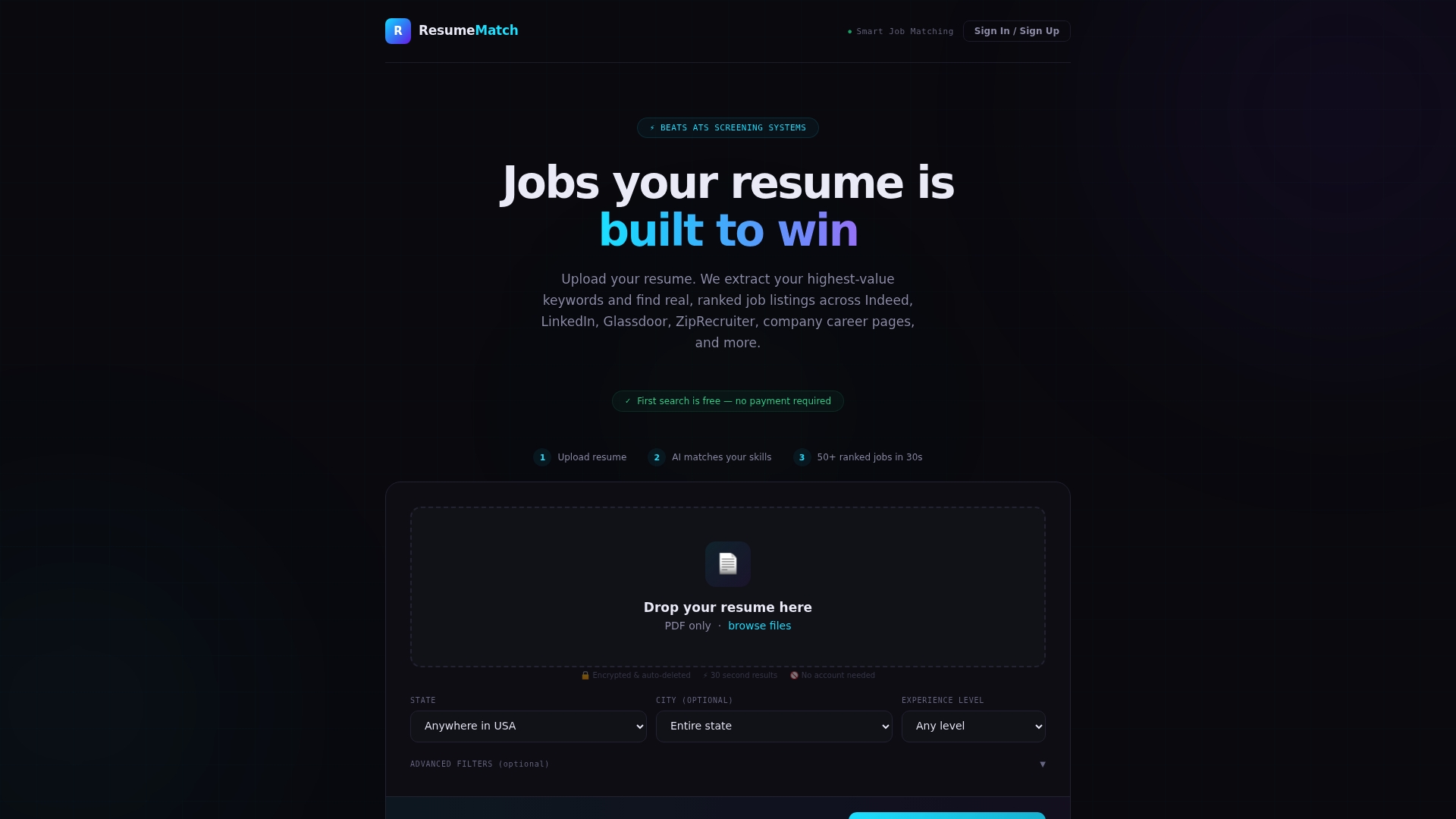
If you’d rather have professionals handle the applications entirely while you focus on interviews and offers, a personalized job application service is available for a one-time fee. For ongoing job search support, resume analysis, and tailored job matching, a subscription membership is offered. Either way, start by seeing what your resume actually qualifies for at ResumeMatch.
Sources
- Most job seekers skip negotiation and pay a high price
- Pushing the envelope: Information frictions, coaching, and salary negotiations - NBER
FAQ
What Is the #1 Rule of Salary Negotiation?
Ask. Don’t ask whether the offer is negotiable, just make a specific counteroffer with a brief rationale attached. Treating the initial number as an opening bid, not a final answer, is what separates people who improve their offer from people who don’t.
What Should You Not Say in a Salary Negotiation?
Avoid apologizing for asking, disparaging the offer as unfair, or leaning on personal financial pressure as your main reason. Constraint rationales, like market data or a competing offer, produce better results than complaints or emotional appeals.
How Do You Politely Ask for a Better Salary Offer?
Open with genuine thanks for the offer, state a specific number, and give one concise reason such as market benchmarks or a competing offer. Close by asking for a written revision or a short call, which keeps the tone collaborative rather than confrontational.
How Do I Write a Detailed Email to Negotiate My Salary With HR?
Keep it under 150 words: thank them, name your target figure, cite one or two benchmarks (a market range or a competing offer), and request next steps. A tool like a Career Probability Report can help you pull specific benchmark numbers before you draft the email.
Is It Risky to Negotiate Salary by Email?
Not usually. Email gives you time to phrase your ask carefully and creates a written record of the conversation. Nearly 85% of people who counter an offer see some improvement, and most employers expect a counter after extending an offer.