
How to Get Personalized Job Matches That Actually Fit
How to Get Personalized Job Matches That Actually Fit

Personalized job matching is the process of using AI to compare your resume, skills, and career preferences against live job listings and return only the roles most likely to hire you. To get personalized job matches, you need more than a keyword search. You need a system that reads your experience the way a recruiter does, scores each role against your profile, and tells you exactly where you fit and where you fall short. AI-driven platforms now do this through semantic analysis, gap analysis, and fit scoring, turning a scattered job search into a targeted, efficient process.
What do you need to get personalized job matches?
The right inputs determine the quality of your matches. Garbage in, garbage out applies directly here. A vague resume with generic bullet points produces generic recommendations. A detailed, current resume with specific skills, job titles, and technologies produces tight, relevant results.
Here is what you need before you start:
- An updated resume file. PDF, TXT, and MD formats are all accepted by most AI matching platforms. Your resume is the primary data source the system uses to build your candidate profile.
- A list of your core skills and tech stack. If your resume does not explicitly name the tools or frameworks you use, add them. AI platforms parse skills, experience, tech stacks, and seniority level directly from your resume text.
- Defined job preferences. Configuring role type, location, salary range, and seniority gives the matching algorithm the filters it needs to rank results accurately. Without these, the system defaults to broad matches that waste your time.
- Access to a multi-source job matching platform. Single job boards like one company’s career page miss most of the market. Platforms that pull from multiple boards and company career sites give you far wider coverage.
- Context notes for skill gaps. If you have adjacent experience in a skill you have not formally used, write one sentence describing it. This context feeds directly into how the AI tailors your resume for each role.
Pro Tip: Keep your profile data as specific as possible. The more detail you give the AI, the narrower and more relevant your custom job recommendations become. Think of it like briefing a recruiter: the more they know about you, the better they can place you.
How to set up your profile for tailored job alerts

Setup is where most job seekers lose accuracy. They upload a resume and skip the configuration steps, then wonder why their matches feel off. The setup process directly controls how the AI scores and ranks every job it finds for you.
Follow these steps to configure your profile correctly:
- Upload your resume in a supported format. Most platforms accept PDF and plain text. Upload the most recent version. If you have multiple resumes for different roles, start with the one closest to your primary target.
- Review the extracted profile. After parsing, the system displays the skills, experience, and seniority it pulled from your resume. Read this carefully. Missing or misread data here causes poor matches downstream.
- Fill in profile gaps manually. If the AI missed a skill or misread your seniority level, correct it. This step is often skipped and it is the most common reason for weak results.
- Set your job preferences. Define the role types you want, your preferred locations or remote status, your target seniority level, and your salary range. These act as hard filters before scoring even begins.
- Add context for missing skills. If a role you want requires a skill you have partial experience with, write one sentence explaining your exposure. This does not inflate your profile. It gives the AI honest context to work with when tailoring your resume.
- Activate your alerts. Set the frequency for receiving new matches. Daily digests work well for active job seekers. Weekly alerts suit those in early exploration mode.
The quality of your setup directly determines the quality of your personalized employment opportunities. Spending 20 minutes on a thorough setup saves hours of reviewing irrelevant listings later.
How does AI evaluate jobs and create your application materials?
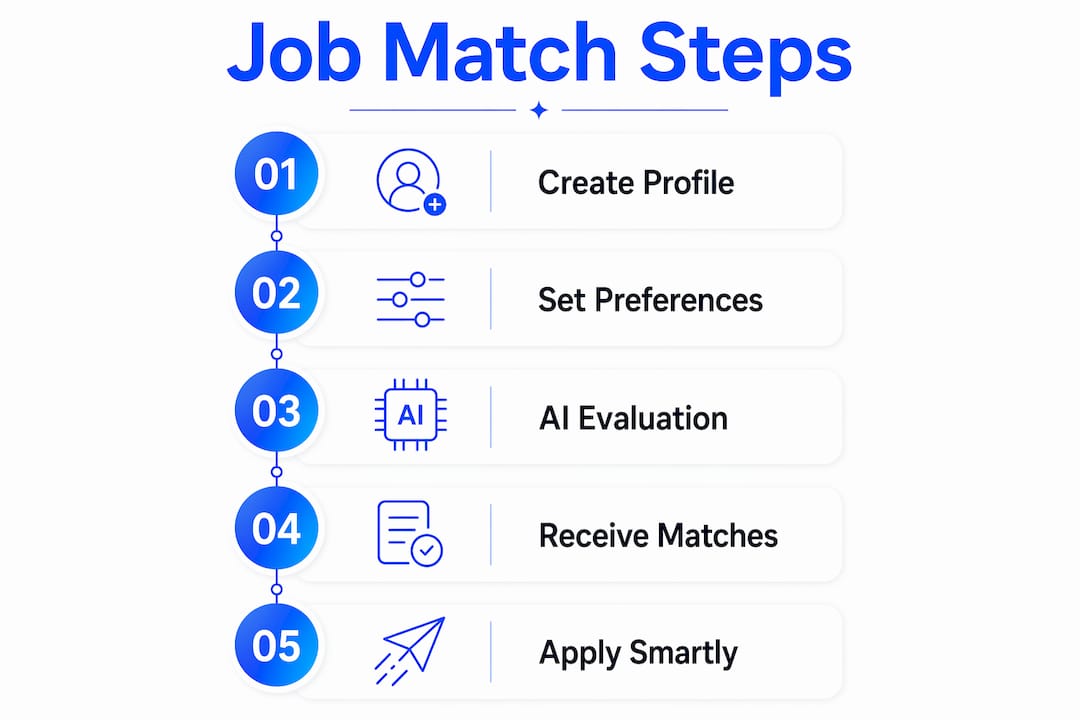
AI job matching platforms do not simply scan for keyword overlap. The most capable systems run a 12-stage pipeline that ingests job data from over 70 countries, performs gap analysis, and filters results to a minimum 70–80% fit threshold before a role ever reaches you. That threshold matters. It means you only see roles where the system has already confirmed a strong alignment between your profile and the job requirements.
The scoring process evaluates four dimensions:
- Skills alignment. Does your listed skill set match what the job description requires?
- Experience level. Does your years of experience and role history align with the seniority the employer expects?
- Tech stack match. For technical roles, does your specific tooling match theirs?
- Seniority fit. Are you applying at the right level, not overqualified or underqualified?
AI fit scores evaluate these dimensions on a 0–100 scale. A score above 80 signals a strong fit. Scores in the 70–79 range indicate partial matches worth reviewing. Scores below 70 are filtered out before you see them.
The matching engine uses embedding-based semantic comparison rather than keyword matching. This means it understands the intent behind a job description, not just its surface words. A job posting that says “cross-functional team leadership” and your resume that says “managed three departments” will connect semantically even though the exact words differ.
Once a match clears the fit threshold, the platform generates application materials. Generated packages include tailored resumes, cover letters, LinkedIn outreach notes, and cold emails. Each document is written specifically for that job, not copied from a template. The resume rewrite highlights the skills and experience most relevant to that particular role. The cover letter addresses the specific requirements in the job description.
Pro Tip: Do not ask the AI to make you look perfect. Ask it to represent you honestly. Authentic gap analysis, where the system acknowledges what you are still building, produces more credible application materials than a resume that claims mastery of everything.
| Evaluation dimension | What the AI checks |
|---|---|
| Skills alignment | Listed skills vs. required skills in the job description |
| Experience match | Years and role history vs. employer expectations |
| Tech stack | Specific tools and frameworks you use vs. those required |
| Seniority fit | Your career level vs. the level the role targets |
| Gap analysis | Missing skills flagged with context you provide |
How to review and act on your job matches efficiently
Receiving matches is only half the process. How you review and act on them determines whether the effort converts into interviews. The most common mistake job seekers make is applying to every match regardless of score. That approach burns time and dilutes the quality of your applications.
Use these practices to work your matches well:
- Read the fit rationale, not just the score. A good platform shows you which skills matched, which partially matched, and which were missing. This breakdown tells you whether a gap is a dealbreaker or something you can address in a cover letter.
- Prioritize freshness. Job listings cross-checked against primary company career pages are more reliable than those scraped from secondary boards. Stale listings waste application effort. Confirm a role is still open before investing time in a full application.
- Set multiple focused alerts. Focused, specific alerts on varied criteria outperform one broad alert. If you are open to both product management and program management roles, set a separate alert for each. You will catch more relevant listings and apply at the right time.
- Use the generated outreach messages. LinkedIn connection notes and cold emails written for a specific role perform better than generic messages. Send them within 48 hours of a job posting going live.
- Skip weak matches. If a score falls below 70 or the gap analysis shows multiple missing core skills, move on. Your time is better spent on roles where you already have a strong foundation.
Pro Tip: When the AI flags a missing skill, add one sentence of context explaining your adjacent experience. Adding one-line context updates your profile automatically and improves both your future match quality and the accuracy of your tailored resumes.
Key takeaways
Getting personalized job matches requires a detailed profile, clear preferences, and an AI system that scores roles on skills, experience, tech stack, and seniority before you ever see them.
| Point | Details |
|---|---|
| Profile quality drives match quality | A detailed, current resume with specific skills produces tighter, more relevant job recommendations. |
| Fit scoring filters weak matches | AI systems use a 0–100 scale and a 70–80% minimum threshold to remove poor fits before they reach you. |
| Semantic matching beats keyword search | Embedding-based comparison connects your experience to job intent, not just matching surface words. |
| Tailored materials improve response rates | AI-generated resumes and cover letters written for each specific role outperform generic applications. |
| Context notes sharpen future matches | Adding one sentence about a skill gap updates your profile and improves all future recommendations. |
What I have learned from watching AI reshape the job search
I built Resume-match because I watched talented people get filtered out by systems that could not read between the lines of a resume. A bartender who managed a team of 12, handled vendor negotiations, and trained new staff every quarter has the core skills of an account manager. A keyword search never made that connection. Semantic matching does.
The shift from keyword matching to embedding-based comparison is the most meaningful change in job search technology in years. It is not just faster. It is more honest. The system reads what you actually did, not just what you called it.
What I find most valuable is the gap analysis. Job seekers used to either oversell themselves to cover gaps or undersell themselves out of fear. A clear fit score with a breakdown of matched, partial, and missing skills gives you something better: an honest picture you can actually work with. You know exactly what to address in your cover letter and what to build next.
The future of this technology moves toward real-time profile updates, where every application you send and every response you receive feeds back into your match criteria. We are not fully there yet. But the foundation, a system that scores roles against your actual profile and generates honest, job-specific materials, already works. I wish I had it when I was job searching.
— Resume
Resume-match and the path to your next role
Finding the right job should not feel like searching for something you cannot name. Resume-match analyzes your resume in 30 seconds, extracts your skills and experience, and matches you to roles across multiple platforms that genuinely fit your profile.
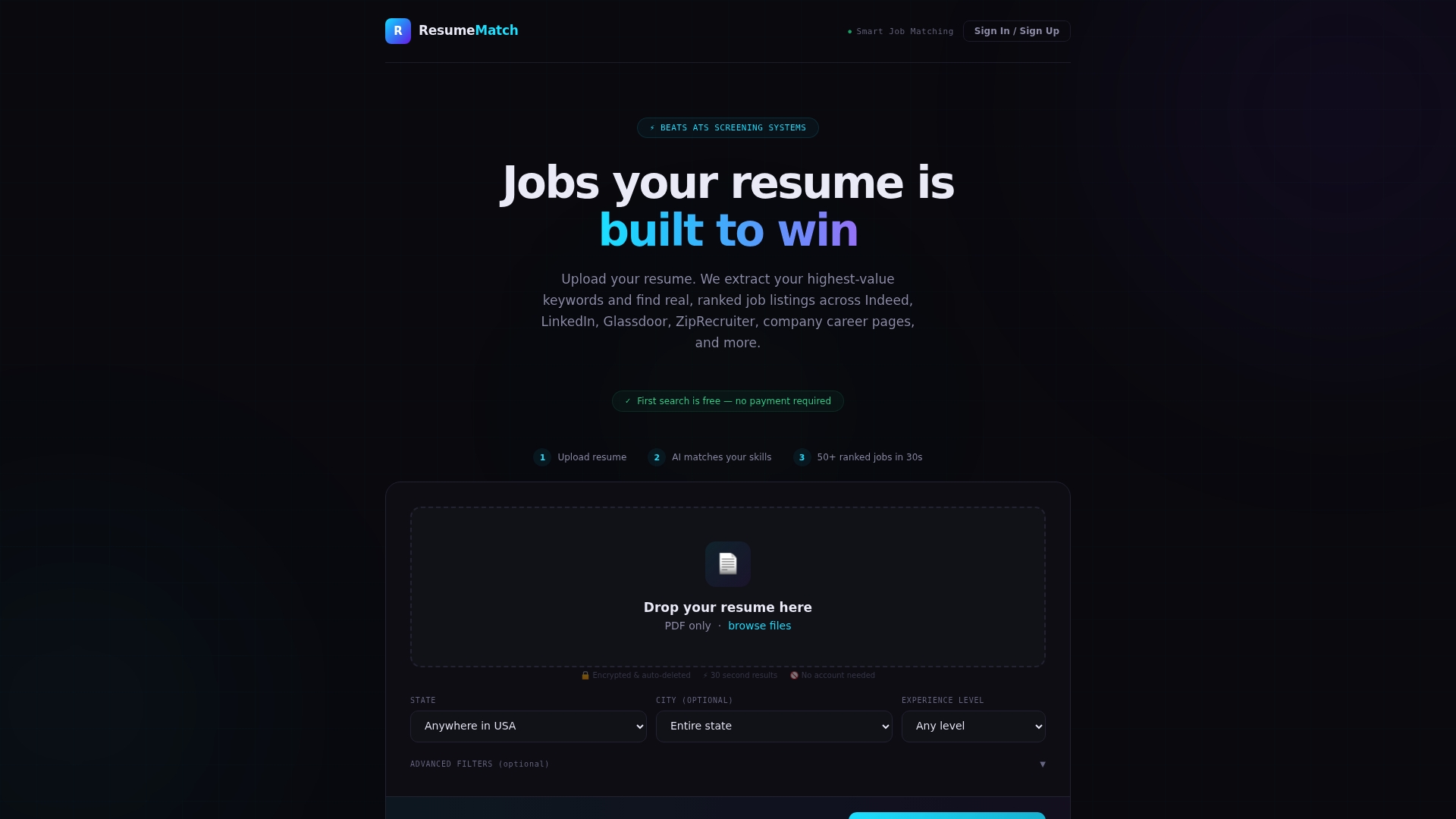
The platform builds a transparent fit score for every match, generates a tailored resume and cover letter for each role, and delivers a Career Probability Report with salary insights and career strategy guidance. You see exactly why each role was recommended and where your profile stands. Whether you are a recent graduate building your first professional profile or a mid-career professional targeting a specific industry, find jobs built for your resume and start applying with materials that actually represent you.
FAQ
What does it mean to get personalized job matches?
Personalized job matching means an AI system compares your resume, skills, and preferences against live job listings and returns only the roles that meet a defined fit threshold, typically 70–80% alignment.
How does AI scoring work in job matching?
AI fit scores evaluate skills, experience, tech stack, and seniority on a 0–100 scale. Roles scoring below the minimum threshold are filtered out before you see them.
Why is semantic matching better than keyword search?
Semantic matching uses embedding-based comparison to understand the intent behind job descriptions. It connects your experience to a role even when the exact words differ, which keyword search cannot do.
How do I improve my personalized job recommendations over time?
Add one-line context notes for any skills the AI flags as missing. This updates your profile automatically and improves both match quality and the accuracy of your tailored resumes going forward.
Should I apply to every job match I receive?
Apply only to matches with strong fit scores and rationale. Roles with multiple missing core skills or scores below 70 are better skipped so you can focus your effort on applications with a real chance of success.