
8% Hiring Lift: When AI Resume Services Are Worth Paying For
8% Hiring Lift: When AI Resume Services Are Worth Paying For

Yes, an AI-powered resume analysis and job-matching subscription is worth it for most active job seekers, but only if you review every output before it goes anywhere near an employer. The evidence backs a real hiring lift from this kind of tool. The catch is that the value disappears fast if you let it auto-apply on autopilot without checking a single word.
TL;DR:
- Resume analysis tools can increase hiring chances by around 8% by reducing writing errors and enhancing clarity, according to a controlled study.
- Effective services identify relevant job postings, check ATS compliance, score fit, and generate matched job lists with detailed reports, but final application review remains crucial.
- Auto-apply modes may lead to mismatched or fabricated details slipping through, so reviewing tailored resumes before submission is essential.
- AI tools are most valuable for career changers, high-volume applicants, or those who struggle with ATS formatting, but less so for senior or highly specialized roles.
- Vet services by confirming they update matches with live postings, incorporate review steps, provide detailed reports, and test with small samples first.
Table of Contents
- Is Resume Writing Services Worth It Based on the Evidence?
- What Do These Services Actually Do?
- When Is Paying for This Actually Worth It?
- How to Vet a Resume Service Before You Pay
- How ResumeMatch Fits This Evaluation
- Are AI Resume Services Worth It? An Evidence-Backed Guide
- Try ResumeMatch: Automated Analysis Without the Guesswork
- Sources
- FAQ
Is Resume Writing Services Worth It Based on the Evidence?
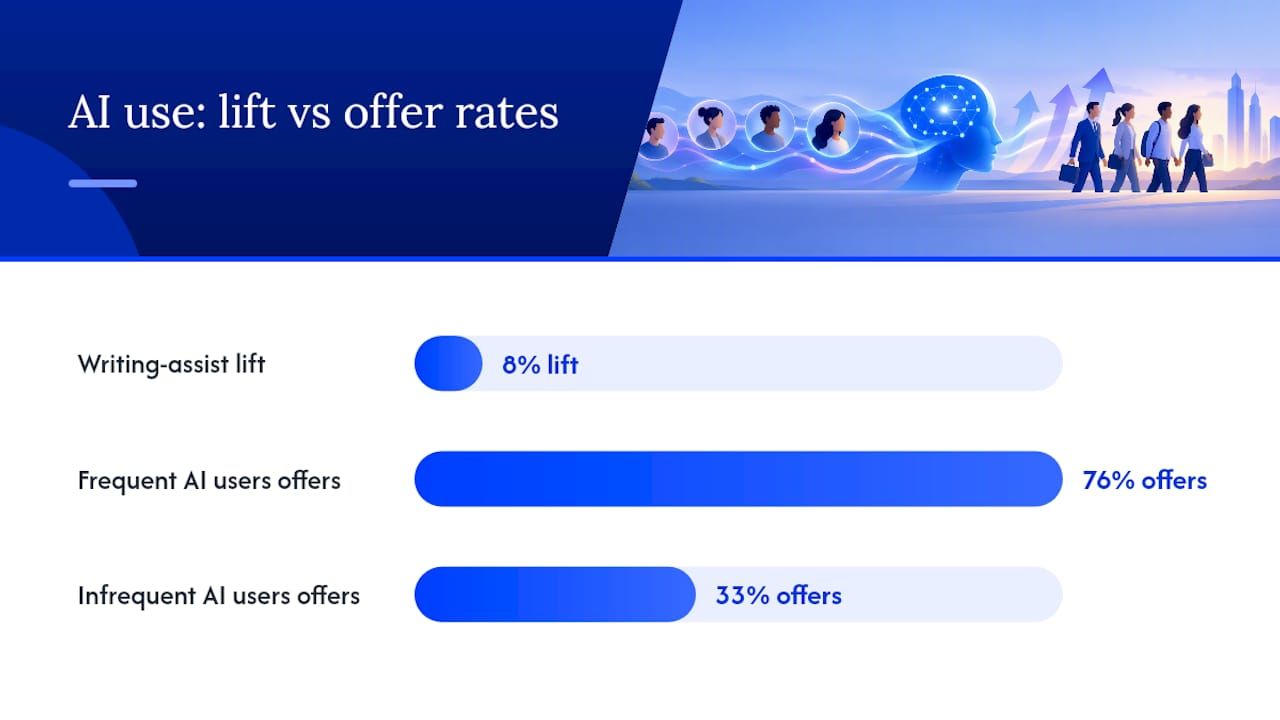
The research says yes, with real numbers behind it. A randomized experiment covering nearly half a million jobseekers found that algorithmic writing assistance raised hiring probability by about 8% for the group that used it, mainly by cutting the writing errors that quietly tank a resume’s clarity. That’s not a marketing claim. It’s a controlled study, and it points to something practical: fixing how you say things measurably changes whether you get hired.
Job-matching algorithms show a similar pattern from a different angle. A large recommender-system experiment on a major job board found that personalized vacancy recommendations increased clicks and modestly raised employment and matching probabilities, with employment gains in the range of a few tenths of a percentage point in some specifications. Small on paper, meaningful at scale, especially for jobseekers who’d otherwise never see roles outside their usual search terms.
Industry survey data adds a real-world signal, with a caveat attached:
- ZipRecruiter research found frequent AI users report offer rates of 76% versus 33% for infrequent users.
- The same research flags selection bias: people who adopt AI tools may already be more proactive or better-resourced job seekers.
- Business Insider reporting documents recruiters who can spot AI-written content and are wary of fully autonomous application sending.
That last point matters more than most vendors admit. The technology works. The way people deploy it is where things go wrong.
What Do These Services Actually Do?
Strip away the marketing and an AI resume platform is doing a handful of concrete jobs: extracting keywords from job postings, checking your resume against applicant tracking system (ATS) formatting rules, scoring how well your background fits a specific role, and generating a list of matched openings pulled from live job boards. Better platforms go further with a structured report covering resume gaps, salary ranges for your target roles, and a career strategy built around your actual experience rather than generic advice.
Where these tools diverge is in how they handle the last mile: sending the application.
- Matching and tailoring mode surfaces roles, adjusts your resume language per posting, and hands you the final draft to review before you submit.
- Auto-apply mode sends applications on your behalf, often at high volume, frequently with less human oversight.
The second mode sounds efficient. It’s also where fabricated details and mismatched claims slip through, since large language models can generate confident specifics that aren’t true unless a review queue catches them first. Most credible platforms route outputs through that kind of checkpoint rather than firing blind.
What should land in your hands, realistically: a matched-job list refreshed against current postings, a career probability style report with salary context and gap analysis, and an editable, ATS-ready resume you can tweak before it goes out.
Pro Tip: Treat any report or matched list as a draft, not a verdict. Read it the way you’d read a first draft from a smart intern: useful, fast, and still yours to check.
When Is Paying for This Actually Worth It?
Your situation determines whether this is money well spent or money wasted. Three scenarios where it typically pays off:
- You’re changing careers. You know your skills transfer, but you don’t know how to phrase a decade of bartending as team leadership and inventory management for an operations role. Keyword extraction and fit scoring do that translation work faster than you can alone.
- You’re applying across multiple job boards at volume. Manually tailoring twenty resumes a week for different platforms is a part-time job by itself. Automated matching plus tailoring keeps quality consistent without eating your whole weekend.
- You don’t know ATS formatting. If your resume has never made it past the first screen, a formatting and keyword mismatch is a common, fixable cause.
Skip it, or use it cautiously, in a few situations. Senior or highly specialized roles usually need a bespoke narrative that a generic scoring tool can’t fully capture. And any service that sends applications automatically with no review step is a real risk. Red flags worth walking away from: no visible review queue, vague claims about “guaranteed interviews,” and no transparency about what data feeds the matching engine.
How to Vet a Resume Service Before You Pay
Run this checklist before you hand over a credit card:
- Confirm it scores against real job postings, not a generic template, and check whether matches update as new listings appear.
- Ask whether outputs pass through a review step before anything is submitted on your behalf.
- Check what the report actually includes. A real Career Probability Report style output should cover salary insight and gap analysis, not just a pass or fail score.
- Test it small before you commit. Run two or three live job descriptions through the tool and compare the tailored resume against your original.
From there, track results the way you’d track any experiment: interview rate, response rate within two weeks, and whether the matched jobs are ones you’d genuinely apply to without prompting.
Pro Tip: Keep a simple spreadsheet logging which resume version and which job source produced each interview. Two weeks of data tells you more than any vendor’s sales page.
If you want a head start on the tracking piece, a structured application tracker saves you from rebuilding this from scratch.
How ResumeMatch Fits This Evaluation
ResumeMatch runs your resume through AI analysis that extracts keywords, checks formatting, and pulls a matched-job list from multiple boards in about 30 seconds. Every match comes with a Career Probability Report covering salary insight, gap analysis, and a career strategy tied to that specific job. Here’s how that maps to the vetting checklist above: it scores against live postings, and it produces the kind of structured report a generic keyword tool doesn’t.
A resume score means little without context. What matters is whether the tool tells you why a role fits, what’s missing from your background, and what it would take to close that gap. That’s the difference between a keyword filter and a career strategy.
Are AI Resume Services Worth It? An Evidence-Backed Guide
The conventional advice treats AI resume tools as either miracle workers or gimmicks. Both framings miss what the research actually shows. The NBER data is specific: the hiring lift came from clearer writing, not from tricking an algorithm. That distinction should change how you use these tools. You’re not gaming a system. You’re fixing communication problems a tired job seeker can’t always see in their own resume after the fortieth application.
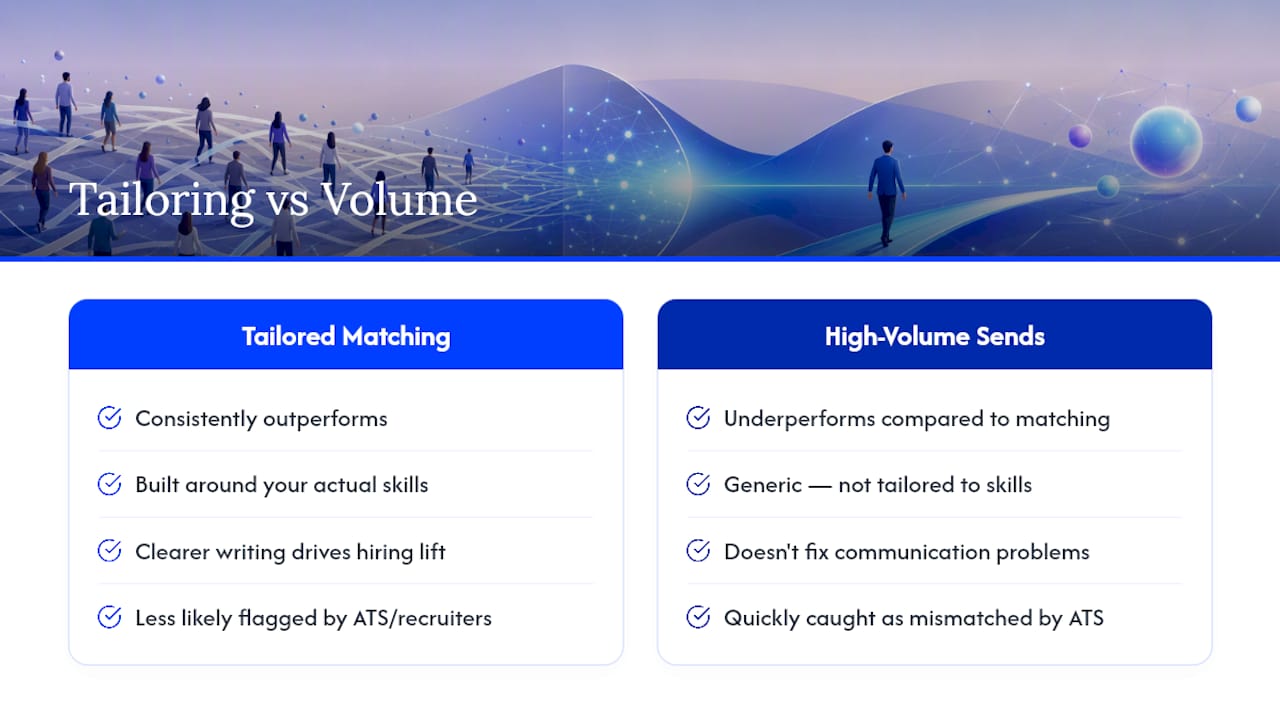
Where most guidance falls short is treating matching and auto-apply as the same category. They’re not. Matching, tailoring, and tracking built around your actual skills consistently outperforms high-volume generic sends, because recruiters and ATS systems both catch a mismatched resume fast.
Prioritize the report over the volume.
— Resume
Try ResumeMatch: Automated Analysis Without the Guesswork
If you’re weighing a subscription against doing this manually, ResumeMatch gives you the automated side without asking you to hand over the wheel entirely. It analyzes your resume, extracts the keywords that matter for your target roles, and delivers matched job listings across multiple boards in about 30 seconds, along with a Career Probability Report covering salary insight and gap analysis.
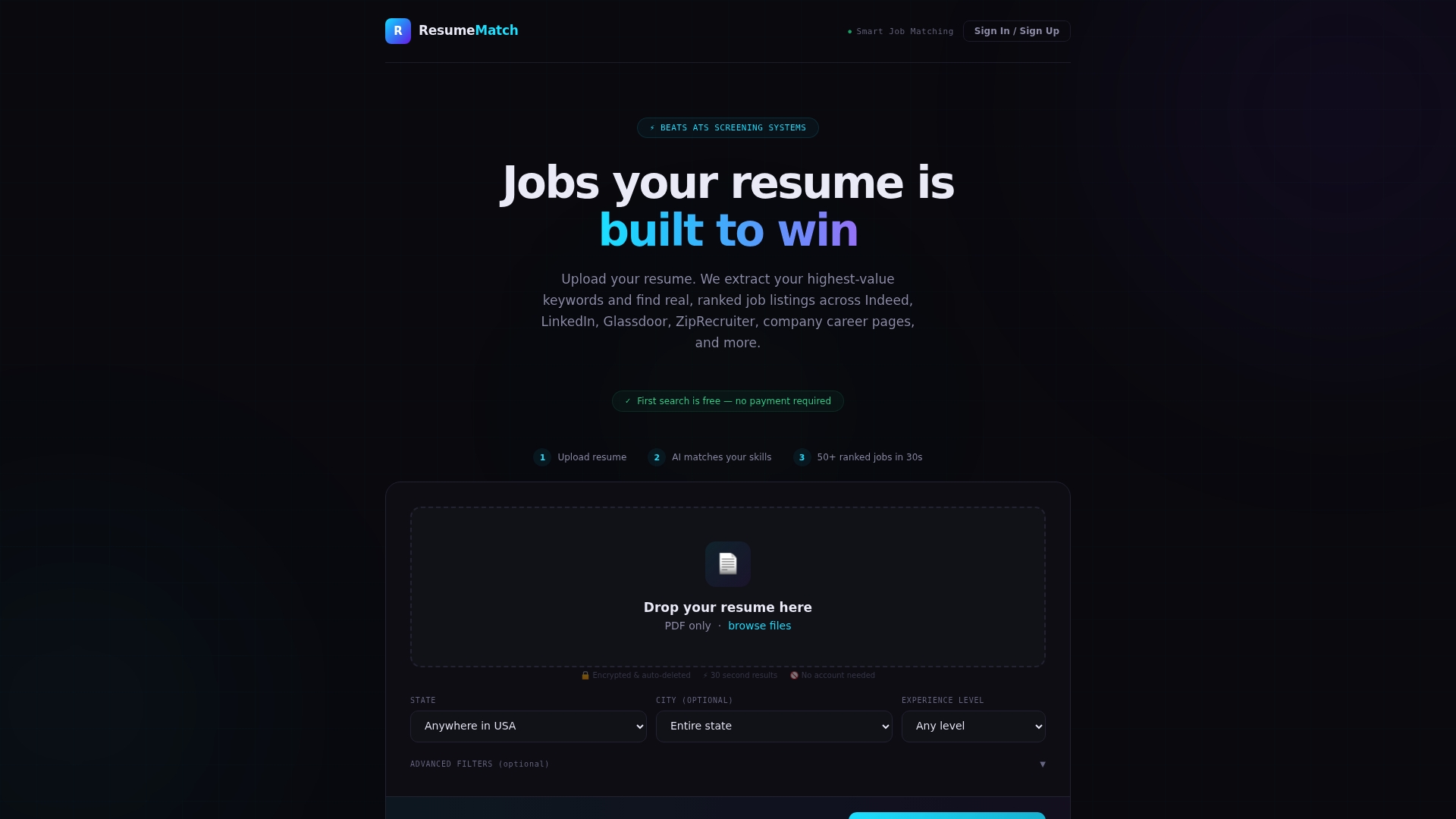
The ResumeMatch Membership starts at $15 per month, and if your time is the scarcer resource, the Let Us Apply For You service handles a set number of personalized applications for a one-time $50 fee. Either way, read through your matched jobs and your tailored resume before anything goes out. Start with a free trial and see what your Career Probability Report actually says about your next move.
Sources
- Algorithmic writing assistance and hiring outcomes (NBER working paper)
- How can AI improve search and matching? (OECD / workshop paper)
- AI-powered job seekers are twice as likely to land an offer (ZipRecruiter research)
- How you should use AI in the job hunt, according to HR pros (Business Insider)
FAQ
Is a resume writer worth it compared to an AI tool?
A human resume writer offers a bespoke narrative, which suits senior or highly specialized roles. For most active job seekers applying across multiple postings, AI-powered matching and analysis covers keyword extraction, ATS formatting, and volume tailoring at a fraction of the cost and turnaround time.
What is the cost of resume writing services like ResumeMatch?
The ResumeMatch Membership is $15 per month, and the one-time Let Us Apply For You service costs $50. Both include a free trial period before you commit.
Do AI resume services actually increase hiring chances?
Yes. A randomized field experiment found algorithmic writing assistance raised hiring probability by about 8% for treated jobseekers, mainly through fewer writing errors and clearer communication.
How long does it take to get results from an AI resume service?
ResumeMatch delivers matched job listings and an analysis in about 30 seconds after you upload your resume. A full Career Probability Report with gap analysis and salary insight follows shortly after, so you can review it before applying anywhere.
Are auto-apply services risky?
Yes, when they send applications without a review step. Industry reporting shows recruiters increasingly detect AI-generated content and expect human review before submission, so checking outputs before they go out protects your credibility.