
Email Recruiters at 9–11 AM, Then Adjust by Scenario
Email Recruiters at 9–11 AM, Then Adjust by Scenario

The best time to email a recruiter is Tuesday through Thursday, between 9 and 11 in the morning in the recipient’s local time zone. That window lines up with how recruiters triage their inboxes: after Monday catch-up and before Friday wind-down, when they actually have focus time to read and reply. Send outside that window and your message risks getting buried under a hundred others.
TL;DR:
- Reply to recruiter initiated outreach within the same business day, ideally within a few hours, while the role and conversation remain fresh.
- Follow up after three business days, wait seven to ten more for a second note, then about two weeks before the final message.
- Schedule sends by the recruiter’s local clock; roles with shifts may favor shift changes, while senior hiring managers may check messages before 9 AM.
- Keep email to three or four short sentences, use a subject line under eight words, and offer specific call times rather than a vague request.
- Most recruiters who intend to respond do so within 48 to 72 hours, though interview rounds and approvals can extend the wait.
Table of Contents
- Best days and hours to email recruiters (general rule)
- Timing by scenario: after applying, replying to recruiter outreach, and follow-ups
- How to craft a timing-aware message (subject line, opening line, length, CTA)
- Timezone, industry, and seniority adjustments to timing
- Expected response timeline and a short follow-up cadence
- ResumeMatch: tools and workflows that make timing and follow-ups reliable
- One habit worth adopting from this whole article
- A faster way to time, track, and send the right outreach
- FAQ
- Sources
Best days and hours to email recruiters (general rule)
Recruiters start Monday digging out of a weekend’s worth of messages and prepping for the week’s interviews. That means a Monday email often lands in a pile, not a priority list. By Tuesday, most of that backlog is cleared, and recruiters settle into steadier email habits through Wednesday and Thursday. Friday brings a different problem: shorter attention spans, more internal meetings, and a general rush to close out the week. A message sent Friday afternoon is likely to sit untouched until the following Monday, by which point it’s competing with a fresh batch of weekend and overnight emails.
Within those Tuesday through Thursday windows, timing inside the day matters almost as much as the day itself. Mid-morning, roughly 9 to 11 AM, tends to work best because recruiters have cleared overnight messages but haven’t yet dropped into back-to-back interviews. Early afternoon, around 1 to 3 PM, is a solid second option once the post-lunch slump passes. Lunchtime itself, between noon and 1 PM, can work as a backup window since some recruiters check email while eating at their desks, though it’s less reliable than the other two.
- Tuesday to Thursday carries the most consistent recruiter attention.
- 9 to 11 AM is the strongest single window for opens and replies.
- 1 to 3 PM works as a reliable second window.
- Noon to 1 PM is an acceptable backup, not a first choice.
Weekends are a different conversation entirely. Recruiter-sourced guidance points to roughly 9 AM to 6 PM on weekdays as the expected contact window, with weekend outreach generally discouraged unless the situation calls for it. A weekend message can occasionally reach a passive candidate who checks email off-hours by habit, but it just as easily gets buried in Monday’s triage if it isn’t timed to land near the top of the queue.
Timing by scenario: after applying, replying to recruiter outreach, and follow-ups
The right moment to email a recruiter depends heavily on what triggered the email in the first place. A cold outreach after applying follows different rules than a reply to a recruiter who already messaged you first.
- After applying for a role: hold off on an immediate follow-up email if you just submitted the application outside business hours. Wait until the next Tuesday through Thursday morning window, then send a short note referencing the role and your fit for it.
- Replying to recruiter outreach: respond within the same business day whenever possible, ideally within a few hours. Recruiters juggle multiple open roles, and a same-day reply keeps you near the top of their attention while the context is still fresh.
- First follow-up after no response: send three business days after your original email, inside the same 9 to 11 AM or 1 to 3 PM windows that worked for the first message.
- Second follow-up: wait seven to ten business days after the first follow-up before sending another note, keeping it brief and adding any new, relevant detail (a new reference, a completed certification, an updated portfolio link).
- Final follow-up: after roughly two weeks past the second follow-up, send one last message that gives the recruiter an easy out and signals you’re still interested without sounding impatient.
A candidate who applies Monday evening, for example, does better waiting until Tuesday morning to send a short note than firing one off at 11 PM the night of the application. The Tuesday message lands fresh in a cleared inbox instead of competing with a weekend’s backlog.
How to craft a timing-aware message (subject line, opening line, length, CTA)
Good timing only helps if the message itself earns a reply once it’s opened. A recruiter scanning a crowded inbox during that 9 to 11 AM window decides in seconds whether your email is worth a second look.
- Subject line: lead with the role title, add a short hook, and keep it under eight words, like “Senior Analyst Applicant: 6 Years in FP&A.”
- Opening line: state your ask and your fit immediately. Skip the warm-up and name the role, your relevant background, and what you want in one sentence.
- Length: keep recruiter emails to three or four short sentences. A LinkedIn message can be even shorter since it’s read on mobile more often than email.
- Customization: use the recruiter’s actual name and reference something specific about the role or team, not a generic “I saw your posting.”
- Closing: give one clear next step, like a specific call time or a simple yes/no question, instead of a vague “let me know.”
Pro Tip: Name two or three specific time windows you’re available for a call, rather than asking the recruiter to suggest one, so replying takes them ten seconds instead of two minutes.
Before hitting send, run through a quick checklist: confirm the recipient’s local time, double-check the spelling of their name, and make sure the first sentence matches the actual role you’re addressing rather than a copy-pasted template. These small checks matter more than they seem, because a message that arrives at the right hour but reads like it was sent to fifty other recruiters loses the advantage that good timing bought you.
Timezone, industry, and seniority adjustments to timing
The 9 to 11 AM rule only works when it’s measured against the recipient’s clock, not yours. A candidate in one time zone emailing a recruiter three hours ahead needs to shift their send time accordingly, or risk hitting that recruiter’s inbox well before or after the ideal window. Free timezone converters remove the guesswork, and most email clients let you schedule a send for a specific future time rather than firing off a message the moment you finish writing it.
- Cross-timezone sends: convert to the recipient’s local time before scheduling, never your own.
- Corporate recruiting teams: tend to follow the standard Tuesday to Thursday, mid-morning pattern closely.
- Hourly or shift-based industries: recruiters may check email in shorter bursts around shift changes, so late morning or early evening can sometimes outperform the standard window.
- Senior-level hiring managers: often have denser calendars, so early morning, before 9 AM, can occasionally beat the usual window since it’s the quietest part of their day.
- Remote-first teams: tend to tolerate a wider timing range since asynchronous communication is already the norm, loosening the strict windows somewhat.
Expected response timeline and a short follow-up cadence
Most recruiters who intend to respond do so within 48 to 72 hours of a well-timed email, though that window stretches considerably once a hiring process involves multiple interviewers or approval stages. A lack of response in 72 hours doesn’t necessarily mean rejection. It often just means the recruiter is mid-cycle on other roles.
- First follow-up: three business days after your original message.
- Second follow-up: seven to ten business days after the first follow-up.
- Final follow-up: around two weeks after the second, closing the loop politely either way.
Practitioner guidance suggests mid-week, mid-morning sends consistently outperform other windows, because they land right after recruiters clear Monday’s backlog and before Friday’s attention starts to fade, based on recruiter-sourced timing advice.
If you never hear back after the final follow-up, it’s reasonable to move on and redirect your energy toward other contacts at the company, such as the hiring manager listed on the posting or a team member you can find through a mutual connection.
ResumeMatch: tools and workflows that make timing and follow-ups reliable
Good timing is only half the job. Knowing who to email, what to say, and when you last reached out matters just as much, and that’s where having a system pays off.
- Resume keyword matching connects your background to live job listings so your outreach targets roles where you’re already a strong fit, not a cold guess.
- Outreach templates give you a starting point for recruiter emails that you can adjust for tone and role without starting from a blank page each time.
- Application tracking keeps a record of when you applied, when you followed up, and what’s still waiting on a reply, so a three-day or ten-day cadence doesn’t depend on memory.
- Career Probability Report adds context on where you’re likely to land interviews, which helps you decide which applications deserve a timed follow-up and which don’t.
If you want a deeper look at matching your resume to roles before you even start timing outreach, our guide on getting personalized job matches that actually fit walks through the process. And once you’re sending multiple applications a week, our piece on how to track job applications in ten minutes shows how to keep follow-up timing from slipping through the cracks. For resume formatting questions that come up alongside outreach, our federal resume format guide covers ATS-ready structure worth knowing even outside federal applications.
One habit worth adopting from this whole article
If you take one thing from everything above, make it this: batch your recruiter outreach into a single block, Tuesday through Thursday, 9 to 11 AM, and treat it like a recurring appointment rather than something you squeeze in whenever you remember.
Try it for one week. Pick two or three mornings, set a recurring calendar block, and send every recruiter email, every reply, and every follow-up inside that window. You’ll likely notice two things: fewer typos and rushed messages, since you’re not firing off emails between other tasks, and a tighter sense of who you’ve contacted and who still owes you a reply.
A quick starting checklist:
- Block three mornings this week for outreach only.
- Pull your list of pending follow-ups before the first block.
- Send nothing outside the window unless it’s a same-day reply to a recruiter who messaged first.
— Resume
A faster way to time, track, and send the right outreach
Timing your emails well gets you noticed. Pairing that timing with the right outreach, sent to roles that actually match your background, gets you interviews. Our ResumeMatch Membership runs $15 per month and gives you resume-to-job matching, outreach templates, and application tracking in one place, so your Tuesday morning send goes to a recruiter whose role fits what you actually do.
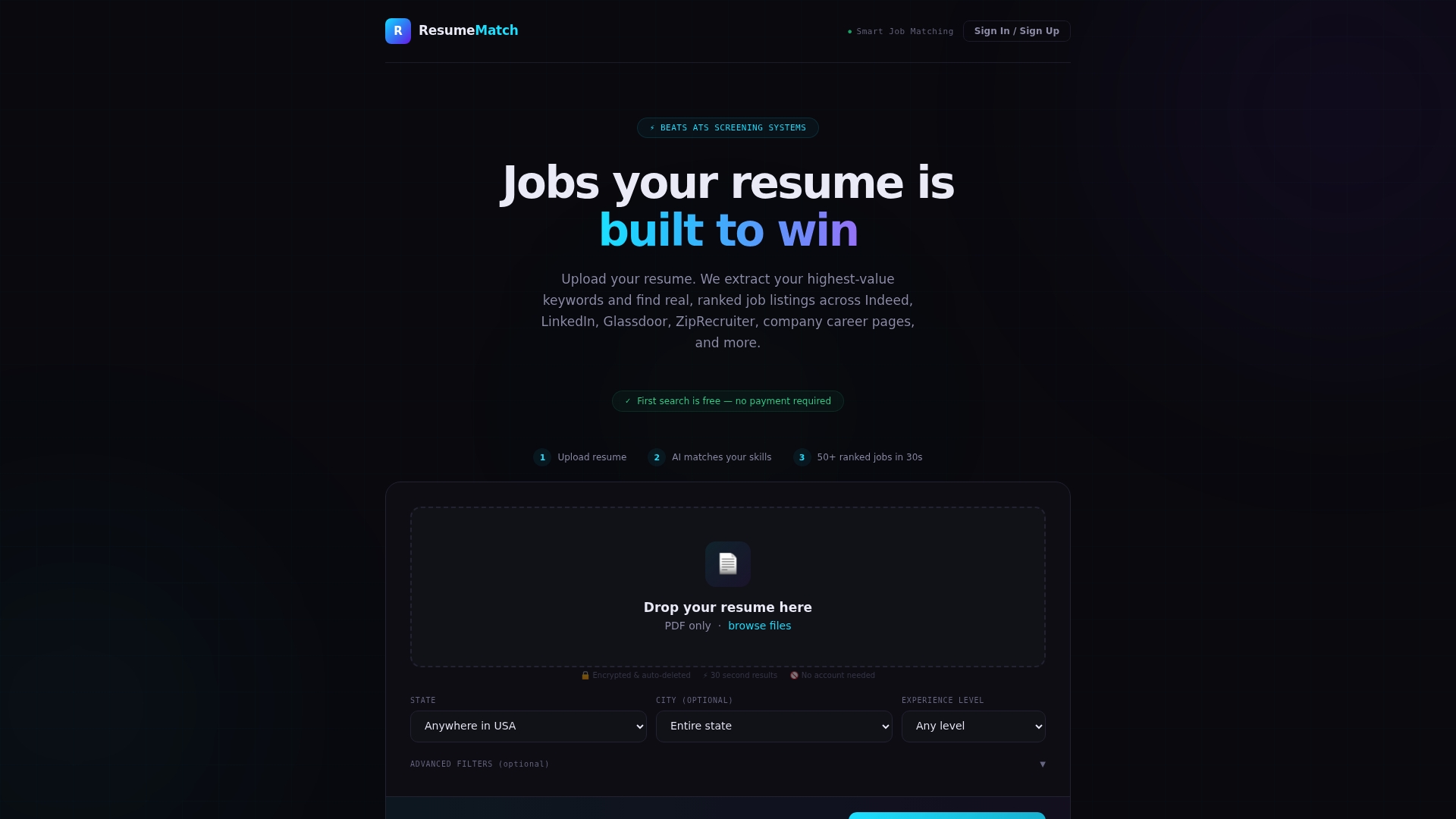
If sending and tracking every application yourself isn’t realistic on top of a full job search, our Let Us Apply For You service handles a set number of personalized applications on your behalf for a one-time $50 fee. Either way, you can start a free trial today at Resume-match and see your matched roles before deciding what to send next.
For general message craft and interview prep alongside your timing strategy, Cornerstone’s resume and interview tips offer a useful outside perspective from a recruiting firm’s point of view.

FAQ
Should I email the hiring manager after applying?
Emailing a hiring manager after applying can help if you have a specific, relevant reason to reach out, such as a referral or a direct connection to the role. Keep the message short, reference the application you submitted, and send it during the same Tuesday through Thursday, mid-morning windows recommended for recruiters.
What is the 7 second rule for a resume?
The idea behind this rule is that a recruiter forms a first impression of your resume in just a few seconds, scanning for role titles, keywords, and overall formatting before reading in depth. That’s why clear formatting and front-loaded, relevant keywords matter as much as the content itself.
What are the best times to send an email?
For recruiter outreach specifically, mid-morning between 9 and 11 AM on Tuesday through Thursday tends to perform best, with early afternoon between 1 and 3 PM as a solid second option, according to recruiter-sourced guidance. Avoid sending late on Friday or over the weekend unless the situation is time-sensitive.
What are red flags for recruiters?
Recruiters tend to flag resumes or messages with vague or exaggerated claims, inconsistent timelines, and generic outreach that clearly wasn’t customized to the role. A message sent at an odd hour isn’t a red flag on its own, but combined with a copy-pasted tone, it can make your outreach easy to skip.