
48–72 Hour Reset for Job Search Burnout and the 50 Job Test
48–72 Hour Reset for Job Search Burnout and the 50 Job Test

If your job search is draining you, stop applying for a moment. Take a strict 48 to 72 hour reset, then run a process audit before you send another application. Job search burnout is common, well documented, and fixable. The fastest way out isn’t more effort. It’s a smarter, more measurable process.
TL;DR:
- Applying to 50 tailored jobs and analyzing your responses can reveal whether your resume or targeting needs improvement.
- Taking a 48 to 72 hour pause focused on sleep, personal tasks, and reflection helps reset mental and physical exhaustion from job searching.
- Tracking key metrics like response rate and interview success helps identify if the bottleneck is your application quality or market fit.
- Using automation tools and platforms reduces repetitive tasks, freeing energy for strategic efforts like tailoring applications and networking.
- If burnout symptoms persist beyond two weeks despite rest, consulting a mental health professional is recommended to address ongoing stress.
Table of Contents
- What Job Search Burnout Actually Looks Like
- Why Job Hunting Wears You Down Faster Than Other Stress
- Your 48 to 72 Hour Reset Plan
- Rebuild Your Process: The 50-Job Test and Process Metrics
- Coping Tools for the Days That Feel Heavy
- Tools That Cut the Repetitive Work
- Why We Built This With Burnout in Mind
- Let Resume-match Handle the Repetitive Part
- Sources
- FAQ
What Job Search Burnout Actually Looks Like
Burnout doesn’t always announce itself with a breakdown. It usually shows up as a slow leak: less energy, less hope, less care in the work you’re producing. That’s how you end up submitting a cover letter with the wrong company name in it.
The signs cluster into four categories:
- Emotional: dread before opening your inbox, numbness after rejections that used to sting, irritability with people who ask “any luck yet?”
- Cognitive: trouble concentrating on applications, forgetting which version of your resume you sent where.
- Physical: disrupted sleep, tension headaches, appetite changes.
- Behavioral: a visible drop in application quality, procrastinating on tasks you know matter, or compulsively refreshing job boards without applying to anything.
Score yourself against these five questions: Have you felt dread opening job sites this week? Has your sleep changed in the past two weeks? Are you sending applications you know are sloppy just to hit a number? Have you stopped believing effort will pay off? Are friends or family commenting on a change in your mood? Three or more “yes” answers is a real signal you’re past normal frustration and into burnout territory.
This isn’t just an unlucky feeling. The American Psychological Association’s Stress in America report documents how chronic, prolonged stress erodes coping capacity over time, which lines up with what a stalled job search does to your mental bandwidth.

Why Job Hunting Wears You Down Faster Than Other Stress
Job searching combines two conditions psychologists consider especially exhausting: high effort and low feedback. You put real work into an application, tailor a resume, write a cover letter, and then hear nothing. No rejection, no reason, just silence. That’s called ghosting, and it strips away your sense of control faster than an outright “no” would.
A few structural reasons this grinds people down:
- Ghosting removes closure. Your brain keeps a loop open, waiting for resolution that never comes.
- “Spray and pray” feels productive but isn’t. Firing off 30 generic applications a week produces volume without producing signal, and the silence that follows reads as personal failure when it’s actually a targeting problem.
- Unpredictable timelines wreck your sense of progress. Hiring cycles stretch and compress without warning, and macro conditions tracked in BLS employment reports shift hiring volume in ways no individual can control.
The fix starts with a mental shift: stop measuring your search by outcomes you can’t control (interviews, offers) and start measuring process you can control (applications tailored, conversations started). That distinction drives everything in the rest of this guide.
Your 48 to 72 Hour Reset Plan
Before you touch your process, you need to stop and let your nervous system come down off high alert. Trying to redesign your strategy while running on fumes just produces more of the same exhausted decisions.
- Declare a strict pause. No job boards, no LinkedIn scrolling, no “just checking” email for 48 to 72 hours. If a full pause isn’t realistic because you’re in an active interview loop, time-box it instead—one hour a day, no more.
- Prioritize sleep over everything else. Burnout and sleep debt feed each other. Fix your sleep window before you fix your resume.
- Do something with a real finish line. Cook a full meal, finish a book chapter, take a long walk. Job searching has no clear endpoint most days, so your brain needs tasks that actually end.
- Anchor part of your identity outside the search. Spend an hour on a hobby, a class, or a skill unrelated to landing a job. If you’ve been meaning to build a new capability, resources like career-path and certification guides or upskilling platforms are useful ways to spend that time constructively.
- Run a one to two hour audit once the pause ends. Pull up your last 30 to 50 applications. Calculate your response rate. Note how many resume versions you used and whether they were actually tailored.
Pro Tip: Track one “process win” a day during your reset, something you controlled and did well, like a strong cover letter or a real conversation with a contact. It rebuilds a sense of competence faster than waiting for an offer letter ever will.
Rebuild Your Process: The 50-Job Test and Process Metrics
Once you’ve rested, the real fix isn’t applying harder. It’s applying differently. A practitioner framework called The 50-Job Test gives you a clean diagnostic: apply to 50 genuinely tailored roles, then read your results.
- 0 to 1 interviews out of 50: Stop applying. Your resume or targeting has a real problem, and more volume won’t fix it.
- 2 to 3 interviews out of 50: You’re close. Iterate on your materials and keep going at a moderate pace.
- 4 or more interviews out of 50: Your approach works. Scale it up.
One useful diagnostic move here: stopping applications temporarily isn’t giving up, it’s running an experiment. If interviews pick up after you upgrade your resume, the problem was your materials. If they don’t, the issue is likely market fit or targeting, and that calls for a different pivot.
Set a weekly quota you can actually sustain. If you’re unemployed and searching full time, five to eight highly tailored applications a week beats thirty generic ones. If you’re still employed and searching on the side, three to five is realistic without burning out your evenings.
A minimal tracking setup tells you where the bottleneck actually is:
| Metric | What it reveals |
|---|---|
| Applications sent per week | Whether your volume matches your quota |
| Response rate (replies ÷ applications) | Whether your resume or targeting is the problem |
| Interview rate (interviews ÷ applications) | Whether your resume gets you in the door |
| Offer rate (offers ÷ interviews) | Whether the gap is interview performance |
Structured tracking like this makes the bottleneck visible instead of guessed at. A simple tracking system you update weekly is enough to spot the pattern. Measuring process metrics like applications tailored and conversations started, rather than only outcomes, protects your morale because those numbers are within your control. Layer in referrals wherever you can. A short, focused outreach message to someone at a target company tends to generate faster, more human feedback than a blind application ever will, which directly counters the low-feedback loop that drives burnout in the first place.
Coping Tools for the Days That Feel Heavy
Process fixes handle the strategy problem. You still need tools for the emotional weight that rejection and silence bring.
- Reframe the rejection, not the effort. A “no” from one company is data about fit, not a verdict on your worth. Separate the outcome from your identity.
- Reward effort, not results. Give yourself credit for a well-tailored application even if it never gets a reply. Psychology Today’s guidance on job rejection points to this kind of effort-based reward as a way to protect self-esteem when outcomes are outside your control.
- Journal three lines a day. What you did, how it felt, one thing you’ll adjust. It turns a blur of rejection into a record of progress.
- Find a peer group or accountability partner. A moderated job-search community or even one honest friend doing the same search cuts the isolation that makes burnout worse.
Pro Tip: If dread, hopelessness, or sleep disruption last more than two weeks and don’t ease with rest, that’s a signal to talk to a licensed mental health provider, not just push through with more willpower.
Tools That Cut the Repetitive Work
A lot of job search exhaustion isn’t emotional at all. It’s the sheer repetitive labor of reformatting resumes, rewriting cover letters, and tracking who you applied to where.
A few categories are worth building into your process:
- Resume analyzers that flag keyword gaps against a specific job posting.
- Job-matching engines that surface roles aligned with your actual skills instead of making you scroll hundreds of listings.
- Application trackers that log status, dates, and follow-ups automatically.
- Automated follow-up tools that remind you when it’s time to check in without you having to remember.
Platforms like Resume-match sit across several of these categories at once. It analyzes your resume, extracts the keywords that matter, and matches you to live listings across job boards, all while generating a Career Probability Report with salary insight and resume gap analysis. Offloading the repetitive parts of the search frees up energy for the parts that actually move the needle, like tailoring applications for jobs that fit and preparing for interviews.
Why We Built This With Burnout in Mind
We didn’t design Resume-match for people with unlimited time and patience. We designed it for people running on fumes after month three of a search that keeps producing silence. Burnout from job hunting is structural, not a personal failing, and the research on chronic stress backs that up.
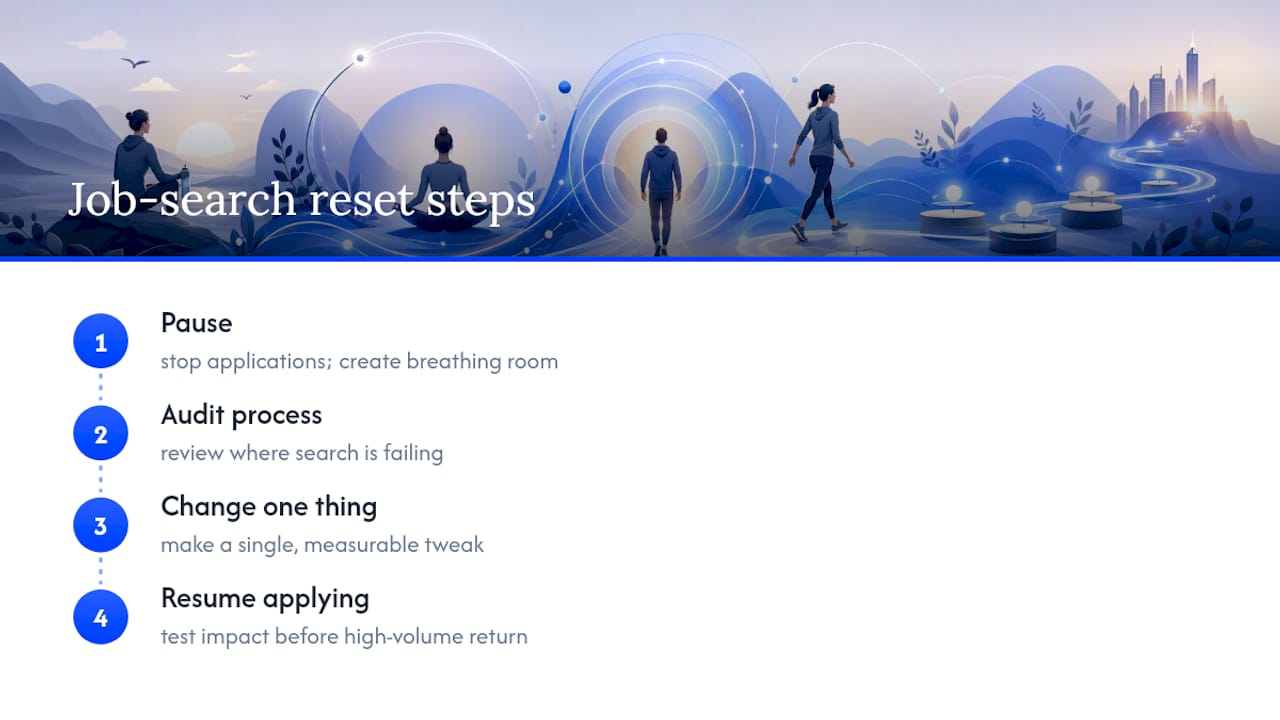
The single change that matters most is the one this whole guide leads with: pause, then audit your process before you apply again. Try the reset. Change one thing about your process. See what happens before you go back to high-volume applying.
— Resume
Let Resume-match Handle the Repetitive Part
Resume-match exists for exactly the moment you’re in: too tired to keep manually rewriting resumes and tracking spreadsheets, but still serious about landing the right role. Instead of spending hours reformatting materials for every posting, you upload your resume once and get matched to tailored job listings across multiple boards in about 30 seconds.
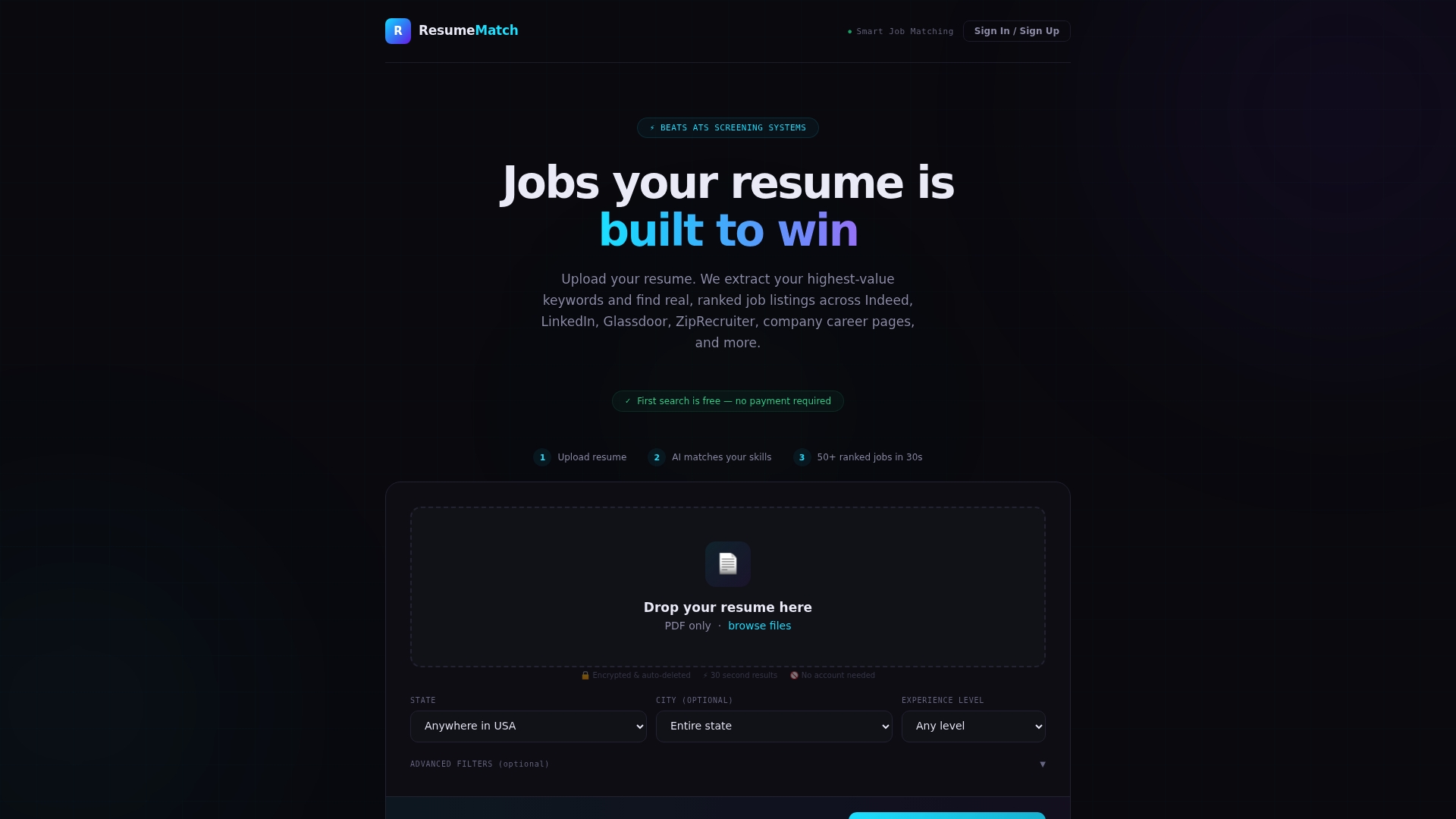
The ResumeMatch Membership runs $15 per month and includes the Career Probability Report, which breaks down your resume’s strengths, potential salary range, and a personalized career strategy so you know exactly where to focus your limited energy. If you’d rather offload the applying entirely, the Let Us Apply For You service is a one time $50 fee where an agent applies to jobs on your behalf, freeing your time for interview prep, skill building, or simply resting. Start with the free trial and see how much energy comes back once the repetitive work is off your plate.
Sources
- U.S. Bureau of Labor Statistics: Employment Situation news release
- American Psychological Association: Stress in America (state of nation report)
- Job Search Fatigue Is Real. Here’s How to Stop Spinning Your Wheels (Evan Pressman)
This article is general information, not a substitute for advice from a qualified doctor. Consult a qualified healthcare professional about your own circumstances before acting on anything here.
FAQ
What Is the 42% Rule for Burnout?
There’s no single, universally recognized “42% rule” tied to burnout research. If you’ve seen it referenced, treat it as informal shorthand rather than an established clinical standard, and rely instead on documented signs like sleep changes, dread, and dropping application quality to judge your own state.
Why Is Job Searching So Exhausting?
Job searching combines high effort with low, unpredictable feedback. You invest real work into each application, then often hear nothing back, which strips away your sense of control faster than a clear rejection would. Ghosting and long, unpredictable hiring timelines make this worse.
How Long Is Too Long to Be Job Searching?
There’s no fixed timeline that applies to everyone, since hiring cycles vary by industry and macro conditions tracked in BLS employment data. A better marker than duration is your response rate: if 50 tailored applications produce zero or one interview, that’s the signal to pause and fix your materials rather than a specific number of weeks.
Why Is Finding a Job So Hard Right Now?
Hiring volume shifts with broader labor market conditions, and competition for visible roles has intensified as more candidates apply to the same postings. Spraying out generic applications compounds the problem by producing volume without signal, which is why shifting toward tailored applications and referrals tends to work better than sheer quantity.