
Salary History: US HR's 6 Step Checklist for Bans vs Transparency
Salary History: US HR’s 6 Step Checklist for Bans vs Transparency

Statewide salary-history bans now cover more than a dozen states plus Washington, DC and Puerto Rico, and the practical baseline for every employer is simple: stop asking candidates about prior pay anywhere in your recruiting process until you have checked the rules for each hiring location. Coverage varies widely by state, so a question that is harmless in one jurisdiction can trigger liability in another. We break down the differences below so you can act with confidence instead of guessing.
TL;DR:
- State and local rules differ by employer type, prohibited conduct, and effective date, so verify local ordinances and whether a restriction covers private employers.
- Laws may prohibit questions, checks with former employers, candidate screening, or using prior pay to set offers; rules for unprompted disclosures vary, especially in California.
- A remote role can trigger range disclosure based on applicant eligibility, employer size, and posting channel, while salary history rules generally follow the worker’s location.
- Employers should remove pay history fields, base offers on salary bands set for each role, train recruiters on volunteered disclosures, and document policy updates.
- Candidates can decline to share past pay, ask for the role’s posted or budgeted range, and keep a record of any prohibited question.
Table of Contents
- 1. Which states ban salary history questions right now
- 2. What the bans actually prohibit and when they don’t apply
- 3. How pay transparency laws interact with salary history bans
- 4. A compliance checklist your HR team can start this week
- 5. What to do if an employer asks about your salary history
- 6. How ResumeMatch helps you turn transparency into a target number
- Why this trend is bigger than one law at a time
- Turn a posted range into a real job-search plan
- FAQ
- Sources
1. Which states ban salary history questions right now
Checking a single state’s rule tells you little about your obligations everywhere else, because each law picks its own mix of prohibited conduct and effective date. Recent compiled lists place more than a dozen states, plus DC and Puerto Rico, among jurisdictions with private-employer bans as of 2026, with Virginia’s statute taking effect July 1, 2026, a date every multi-state employer should have on the calendar. California’s statute, most recently amended through SB-642, prohibits seeking salary-history information from applicants and generally prohibits relying on it when setting pay, while carving out limited treatment for information an applicant volunteers.
A few things to keep in mind as you scan any state list:
- Some bans apply only to public-sector or state-agency hiring through executive order, not to private employers statewide.
- Many cities and counties have their own salary-history ordinances even in states with no statewide law, so a company hiring in Ohio or Illinois may still face local restrictions in specific cities.
- Effective dates matter: a law passed this year may not apply to postings or interviews that happened before its start date.
- Some statutes cover only state contractors or agencies rather than every private employer in the state.
Because the list keeps expanding and because enforcement mechanisms differ, the safest operating assumption is that any state could have some form of restriction. Build your hiring workflow around verifying the rule for each specific work location rather than relying on memory of which states “definitely” have a ban.
2. What the bans actually prohibit and when they don’t apply
Not every salary-history law prohibits the same conduct, and lumping them together is where most compliance mistakes start. The DOL brief on salary history bans notes that bans prohibit asking and relying on prior salary to different degrees, and recommends classifying each jurisdiction by its specific prohibited conduct rather than assuming one nationwide rule applies everywhere.
Break each law into the categories it actually covers:
- Asking directly: the applicant cannot be asked about current or past pay during interviews or on forms.
- Obtaining from a third party: the employer cannot seek history from a current or former employer, staffing agency, or background-check vendor.
- Screening or conditioning: candidates cannot be screened out or disqualified based on their pay history.
- Relying when setting pay: even if history is known, the employer cannot use it to set the offer.
- Retaliation: candidates who refuse to disclose cannot be penalized.
Common exceptions include information an applicant volunteers without prompting, publicly available salary data (such as government pay schedules), confirmations made after an offer with the candidate’s written consent, and internal transfer or promotion scenarios. California’s statute treats volunteered disclosures narrowly, while other states give employers more room to use that information once it is freely offered, so the same conversation can be compliant in one state and risky in another.
Pro Tip: Never prompt a “voluntary” disclosure with a leading question like “what were you hoping to make?” That framing can turn a technically voluntary answer into a prohibited inquiry.
3. How pay transparency laws interact with salary history bans
Salary-history bans and pay-transparency laws solve different problems, and treating them as one rule is a common and costly mistake. A ban limits what you can ask or rely on; a transparency law requires you to post or disclose a pay range at specific stages, regardless of what the candidate tells you. According to Jackson Lewis’s 2026 pay-transparency overview, the exact obligations depend on employer size, job location, remote eligibility, and even the posting method you use.
Watch for these common triggers:
- Employer size thresholds: some posting requirements only apply once you cross a minimum headcount.
- Remote-work nexus: a remote posting open to candidates in a transparency state can trigger that state’s range-disclosure rule even if your office sits elsewhere.
- Posting method: internal job boards, third-party sites, and direct applicant communications can carry different disclosure triggers under the same law.
In practice, you may need to post a range for a Colorado-eligible remote role while simultaneously being barred from asking that same candidate what they earned at their last job.
4. A compliance checklist your HR team can start this week
Treating salary-history and pay-transparency compliance as a one-time project invites gaps as you open roles in new states. Build a repeatable process instead:
- Strip salary-history fields from applications, ATS templates, interview guides, and recruiter scripts across every open role.
- Set offers from role-based bands tied to market data and budget, not to what a candidate previously earned.
- Build a jurisdiction matrix keyed to the candidate’s actual work location and the posting’s reach, with extra scrutiny for remote roles that can draw applicants from multiple states.
- Train hiring managers and recruiters on what to do when a candidate volunteers salary history, including how to document that it was unprompted.
- Audit every job posting for required range disclosures before it goes live, and route postings through an approval step.
- Consult jurisdiction-specific counsel when a role spans multiple states, and keep records showing the steps you took to comply.
Remote hiring adds real complexity here: a hire working from a banned-conduct state while your office sits in a state without one is generally governed by the worker’s location, which is exactly the kind of nexus question that also affects multi-state payroll setup. Pairing your compliance matrix with a payroll and HR process audit catches gaps before they become claims; tools built for overtime and compliance tracking can help HR teams keep documentation consistent across states.
Pro Tip: Date-stamp every policy update and training session. If a claim surfaces later, a clear paper trail showing when you removed salary-history questions is your strongest defense.
5. What to do if an employer asks about your salary history
If you’re job hunting, know that in states with a ban, employers generally cannot ask for your prior pay or use it to set your offer, even indirectly through a staffing agency. That protection shifts the negotiation leverage back toward the number the role is actually worth, not what you happened to earn before.
Practical ways to handle the question if it still comes up:
- Decline politely and redirect: “I’d rather focus on the salary range for this role.”
- Ask directly for the posted or budgeted range instead of answering first.
- Anchor your ask to the posted range rather than your last paycheck, especially in states that require posted ranges.
- Keep a simple record of when and how the question was asked, in case you need to escalate a complaint later.
6. How ResumeMatch helps you turn transparency into a target number
Knowing a range exists is only half the job: you still need to figure out where you fit in it. Our AI resume analysis and Career Probability Report pull salary insights alongside your resume gap analysis, so you get a realistic target range instead of a guess. That matters most when you’re comparing several postings that each publish a different band and trying to prioritize which ones are worth your time.

We built this to help you rank opportunities by expected compensation, not just job title, so your energy goes toward roles that actually pay what you need.
Why this trend is bigger than one law at a time
The real shift isn’t any single state’s statute. It’s that role-based pay-setting and upfront transparency are becoming the default way companies compete for candidates, and employers who keep negotiating off old salary habits will fall behind on both compliance and hiring speed. The practical answer is the same whether you’re reacting to a ban or a disclosure law: set your ranges early, communicate them clearly, and stop treating prior pay as a shortcut.
— Resume
Turn a posted range into a real job-search plan
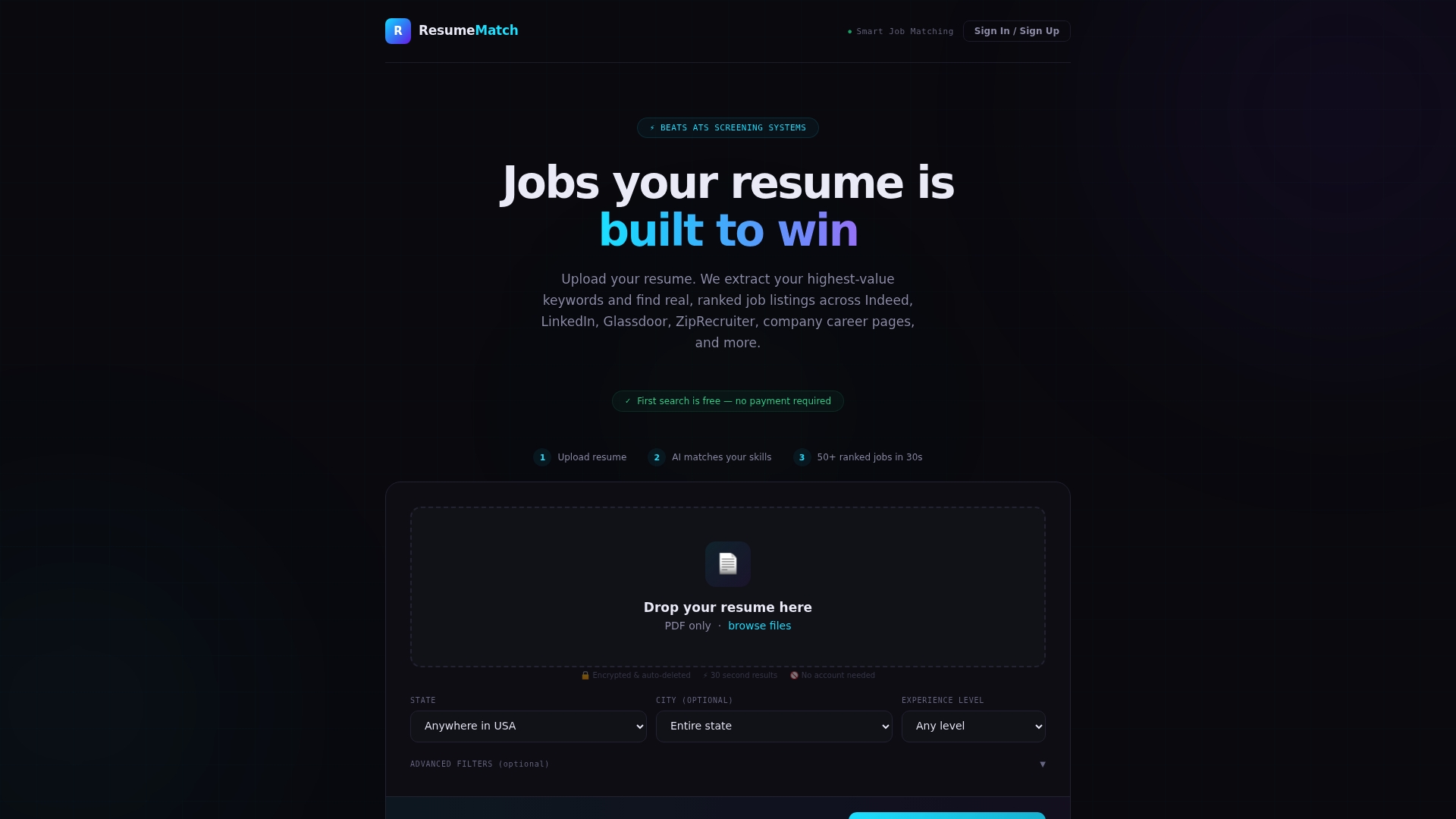
We know a posted salary range only helps you if you know whether you’re actually a strong match for the role behind it, which is the gap our ResumeMatch Membership was built to close. Our Career Probability Report pairs your resume against real job listings, surfaces salary insights, and flags gaps worth fixing before you apply, so you’re negotiating from a range you can actually support. If you’d rather hand off the applying itself, our Let Us Apply For You service runs for a one-time $50 fee with a guaranteed minimum number of personalized applications.
This is a career-support tool built to help you interpret ranges and target the right roles, not a substitute for legal advice on a specific hiring dispute.
| Tool | What it does | Price |
|---|---|---|
| Membership plan | Resume analysis, job matching, Career Probability Report with salary insights | See the pricing details on our website |
| Application agent service | Agent-based application service with a guaranteed minimum number of applications | See the pricing details on our website |
See how your resume and target range stack up by visiting ResumeMatch, or compare features against other tools on our ResumeMatch vs Jobscan breakdown.
FAQ
What states ban salary history questions?
More than a dozen states plus Washington, DC and Puerto Rico currently restrict private employers from asking about or relying on salary history, with Virginia’s law taking effect July 1, 2026. Coverage and exceptions differ by state, so check the specific statute for each location where you’re hiring or applying.
Which states will have pay transparency laws in 2026?
Pay-transparency requirements, which are separate from salary-history bans, continue to expand and depend heavily on employer size and job location according to Jackson Lewis’s 2026 compliance overview. Our breakdown of states requiring posted salary ranges covers which ones require a disclosed range at posting.
Can employers verify salary history?
In states with a ban, employers generally cannot seek salary-history verification from a current or former employer or a third party, though some laws allow limited confirmation after an offer with the candidate’s consent. The scope of what counts as “verification” varies by statute, so the answer depends on the specific jurisdiction involved.
In what states is it illegal to ask about salary?
States with statewide bans generally make it unlawful to ask an applicant directly about current or past pay, though a few laws apply only to public agencies through executive order rather than private employers. Always confirm whether the restriction in a given state covers private employers statewide or only a narrower group.
Sources
- SB-642 Employment: payment of wages (California legislative text)
- Navigating 2026 pay-transparency laws and employer obligations | Jackson Lewis