
LinkedIn's Role in Job Matching: 2026 Guide
LinkedIn’s Role in Job Matching: 2026 Guide

LinkedIn is the world’s largest professional network, and its role in job matching has shifted from simple job board to AI-powered career engine. The platform now uses machine learning models to connect job seekers with relevant roles faster and more accurately than keyword searches alone ever could. Understanding how LinkedIn connects job seekers to opportunities, and what you can do to take full advantage of it, gives you a real edge in a competitive market. Profile optimization, active networking, and knowing how the algorithm works are the three levers that matter most.
How does LinkedIn’s AI power job search and matching?
LinkedIn’s job matching relies on a model called JUDE, which stands for Job Understanding and Embedding. JUDE reads both job descriptions and candidate profiles as concepts, not just strings of text. That shift from keyword matching to semantic understanding is what makes LinkedIn’s recommendations feel more relevant than a basic search filter.
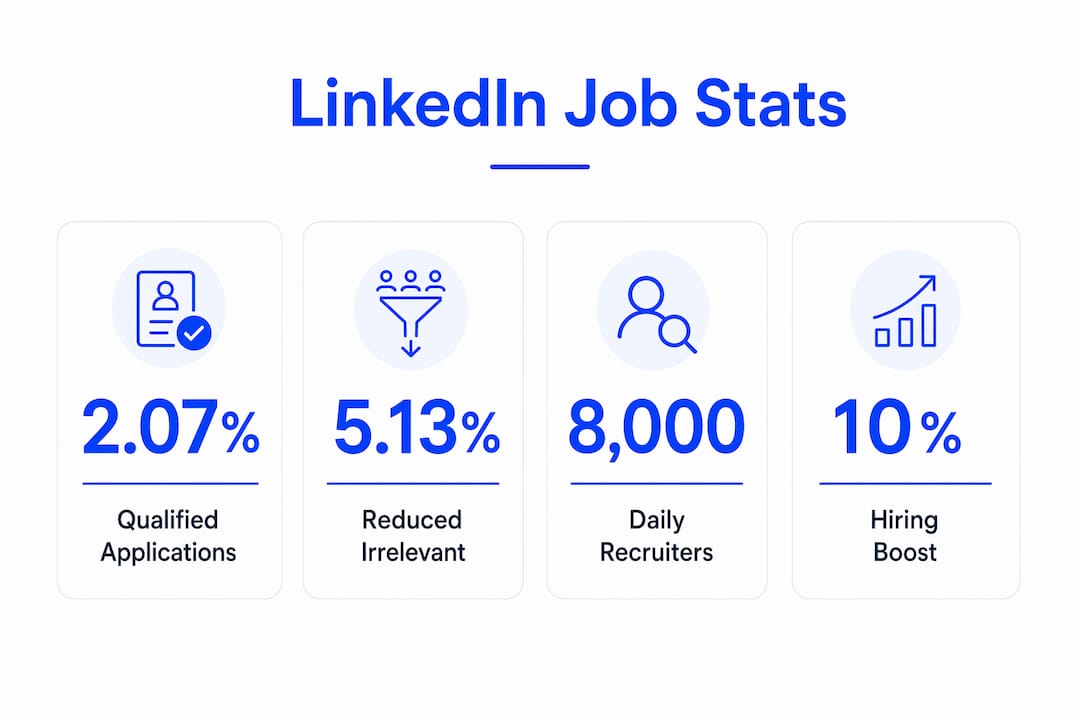
The results are measurable. JUDE improved qualified applications by 2.07% and cut irrelevant job recommendations by 5.13%. Total applications on the platform rose by 1.91% as a result. Those numbers sound small, but at LinkedIn’s scale they represent millions of better-matched connections between job seekers and employers.

The platform’s AI-powered job search is used by 1.3 million people daily, with over 25 million searches conducted weekly. Job seekers without four-year degrees see a 10% boost in hiring likelihood when they use these features. That stat matters because it shows the AI is surfacing skills and experience, not just credentials.
Here is what the AI actually does for you as a job seeker:
- Semantic search: Finds roles that match your skills even when the job title differs from what you searched.
- Personalized recommendations: Ranks jobs based on your profile activity, connections, and past applications.
- Skill gap signals: Flags roles where you meet most but not all requirements, helping you decide where to apply.
- Broader discovery: Surfaces jobs you would never find with exact-keyword searches alone.
Pro Tip: Fill every skills section on your profile with the specific terms employers use in job descriptions. JUDE reads your profile as a concept map, so the more accurately your skills reflect real job language, the better your matches will be.
Why is a strong LinkedIn profile essential for job matching success?
Your LinkedIn profile is not a digital resume. Recruiters and AI agents treat it as an evidence file, scanning for verifiable proof rather than narrative descriptions. Tenure at recognizable companies, endorsed skills, measurable outcomes, and verified credentials carry far more weight than a well-written summary paragraph.
The numbers back this up. Profiles with endorsed skills receive 17 times more recruiter views than profiles without them. Over 90% of professional interactions start with a LinkedIn profile search. That means your profile is almost always the first impression you make, before a resume, before an interview, before anything else.
Optimizing your profile for job matching success comes down to five specific areas:
- Headline: State your current role and your strongest skill, not just your job title. “Marketing Manager | B2B Demand Generation” outperforms “Marketing Manager” every time.
- About section: Lead with a one-sentence summary of what you do and what you have achieved. Follow with two or three measurable results. Skip the personal mission statement.
- Experience entries: Each role should include at least one metric. “Grew pipeline by $2M” beats “Responsible for pipeline growth” in both AI scans and human reads.
- Skills and endorsements: List skills that appear in job descriptions for roles you want. Ask colleagues to endorse the top five.
- Credentials and certifications: Add every relevant certification. AI agents treat verified credentials as hard signals, not soft ones.
Profile freshness also matters. LinkedIn’s algorithm treats recent activity as a signal of engagement. Posting once a week, commenting on industry content, or updating a skill keeps your profile active in the recommendation engine.
Pro Tip: Search for three job postings you want right now. Copy the skill terms they use most often. Then check your profile and add any you are missing. This single exercise can measurably improve how often you appear in recruiter searches.
How does LinkedIn’s networking functionality improve job matching?
LinkedIn’s networking tools do something the algorithm cannot do alone. They surface jobs that are never posted publicly. 64% of job seekers are hired through referrals, which means the majority of successful hires happen through relationships, not job boards. LinkedIn is the infrastructure that makes those relationships scalable.
The practical implication is clear. Applying to posted jobs is only one part of a complete LinkedIn strategy. The other part is building visibility with people who can refer you before a role is ever listed.
Effective networking on LinkedIn for employment looks like this:
- Connect with intention: Send connection requests to hiring managers, team leads, and people in roles you want. Include a short note explaining why you are connecting.
- Join industry groups: Groups surface conversations and job leads that do not appear in your main feed. Active participation builds name recognition.
- Share relevant content: Posting about your field, even briefly, signals expertise to your network and to LinkedIn’s algorithm.
- Comment on others’ posts: Thoughtful comments on posts by people in your target industry put your name in front of their entire network.
- Request informational conversations: A 15-minute call with someone at a company you want to join is worth more than ten cold applications.
LinkedIn’s Hiring Assistant, used by 8,000 recruiters daily as of early 2026, also scans passive candidates. That means recruiters are finding people who are not actively applying. A well-maintained profile with strong connections makes you visible to that sourcing process even when you are not job hunting.
What are the challenges job seekers should know about LinkedIn in 2026?
LinkedIn’s AI tools create real advantages, but they also create real risks. The biggest one is invisibility. LinkedIn’s Hiring Assistant filters out 62% of profiles before a recruiter ever sees them. That means more than half of all job seekers on the platform are effectively hidden from the recruiters using this tool.
The filter is not random. It concentrates on profiles that lack verifiable signals: no endorsed skills, sparse experience descriptions, missing credentials, or low connection counts. A generic profile does not just underperform. It disappears.
There are other challenges worth knowing:
- Skills shift fast: Job skills are expected to change 70% by 2030 due to AI adoption. A profile that was current two years ago may already be missing the terms recruiters now prioritize.
- AI homogenizes shortlists: When every recruiter uses the same AI tool, shortlists start to look similar. Standing out requires more than a good profile. It requires being found through multiple channels.
- Passive reliance is a trap: Submitting applications through LinkedIn’s Easy Apply and waiting is not a strategy. The platform rewards active, visible profiles.
- Human review still matters: AI filters the pool, but humans make the final call. Your profile needs to satisfy both the algorithm and the person reading it.
Pro Tip: Audit your profile every 90 days. Search for job postings in your target role and compare the skills listed there to the skills on your profile. Update any gaps immediately. This keeps you visible to both AI filters and human recruiters.
The broader market context is also worth noting. Hiring is down roughly 20% since 2022, but economic factors, not AI, are driving that decline for now. The platform itself remains one of the most effective channels for job matching, especially when used actively.
Key Takeaways
LinkedIn’s role in job matching is most powerful when job seekers treat their profile as a structured evidence file, engage actively with their network, and complement the platform with other sourcing channels.
| Point | Details |
|---|---|
| AI matching uses semantics | LinkedIn’s JUDE model matches on concepts, not just keywords, so profile language must reflect real job terms. |
| Endorsed skills multiply visibility | Profiles with endorsed skills get 17 times more recruiter views than those without. |
| Referrals drive most hires | 64% of hires come through referrals, making active networking as important as applying directly. |
| AI filters hide most profiles | LinkedIn’s Hiring Assistant removes 62% of profiles before recruiter review, making profile quality critical. |
| Skills will keep changing | Job skills are expected to shift 70% by 2030, requiring regular profile updates to stay competitive. |
What I have learned about LinkedIn after watching thousands of job searches
The job seekers I see succeed on LinkedIn share one habit. They treat their profile as a living document, not a one-time setup. They update it when they complete a project, earn a credential, or learn a new tool. That consistency compounds over time in ways that a single profile overhaul never does.
The part that surprises most people is how much networking still matters even with all the AI. The algorithm is good at matching skills to jobs. It is not good at conveying trust, enthusiasm, or cultural fit. Those signals come from people. A referral from a connection carries weight that no profile score can replicate.
I also think job seekers underestimate the risk of relying on one channel. LinkedIn is powerful, but AI homogenizes recruiter shortlists, which means the candidates who stand out are often the ones who showed up through a referral, a direct message, or a piece of content, not just an application. Multi-channel visibility is not optional anymore. It is the strategy.
The most practical shift you can make right now is to stop thinking of your LinkedIn profile as a resume and start thinking of it as your professional case file. Every entry should answer the question: “What did you actually do, and how do you know it worked?” That framing changes what you write, and it changes how both AI and humans respond to what they read.
— Resume
How Resume-match fits into your LinkedIn job search
LinkedIn surfaces the right jobs. Resume-match helps you make sure your resume is ready to win them.
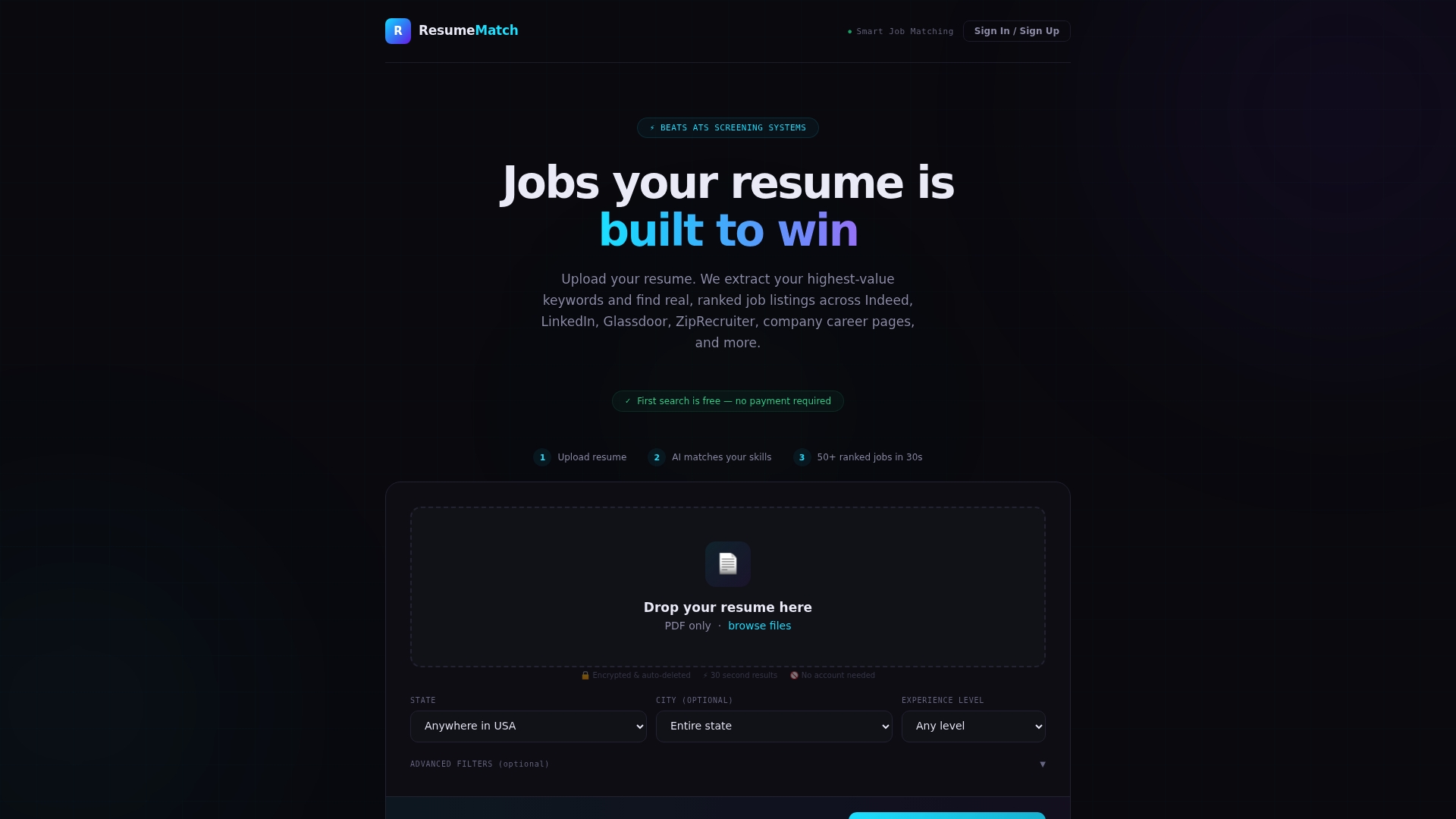
Resume-match analyzes your resume against real job descriptions and extracts the keywords that matter most to employers. It then matches you with tailored job listings across multiple platforms in under 30 seconds. That means you go into every application knowing your resume already speaks the language of the role. Resume-match also generates a Career Probability Report with salary insights and personalized career strategies, so you are not just applying, you are applying with a plan. See how it works and find out which jobs your resume is already built for.
FAQ
What is LinkedIn’s role in job matching?
LinkedIn connects job seekers with relevant roles by using AI models like JUDE to match candidate profiles with job descriptions based on skills and experience, not just keywords. It also surfaces opportunities through networking and recruiter searches.
How does LinkedIn’s AI improve job recommendations?
LinkedIn’s JUDE model improved qualified applications by 2.07% and reduced irrelevant recommendations by 5.13% by reading profiles and job descriptions as concepts rather than text strings.
Can LinkedIn improve job matches for people without degrees?
Yes. LinkedIn’s AI-powered job search boosts hiring likelihood by 10% for job seekers without four-year degrees by surfacing skills and experience rather than filtering on credentials alone.
Why do some profiles get hidden from recruiters on LinkedIn?
LinkedIn’s Hiring Assistant filters out 62% of profiles before recruiter review. Profiles without endorsed skills, measurable experience, or verified credentials are most likely to be excluded.
How important is networking on LinkedIn for finding a job?
Networking is critical. 64% of job seekers are hired through referrals, and LinkedIn’s tools, including groups, direct messaging, and content sharing, are the most scalable way to build those referral relationships.